Our Portfolio
This represents a selection of completed projects and does not include photos of all of our work. Many projects are seasonal, ongoing, or documented privately at a client’s request.
-
![mini prairie]()
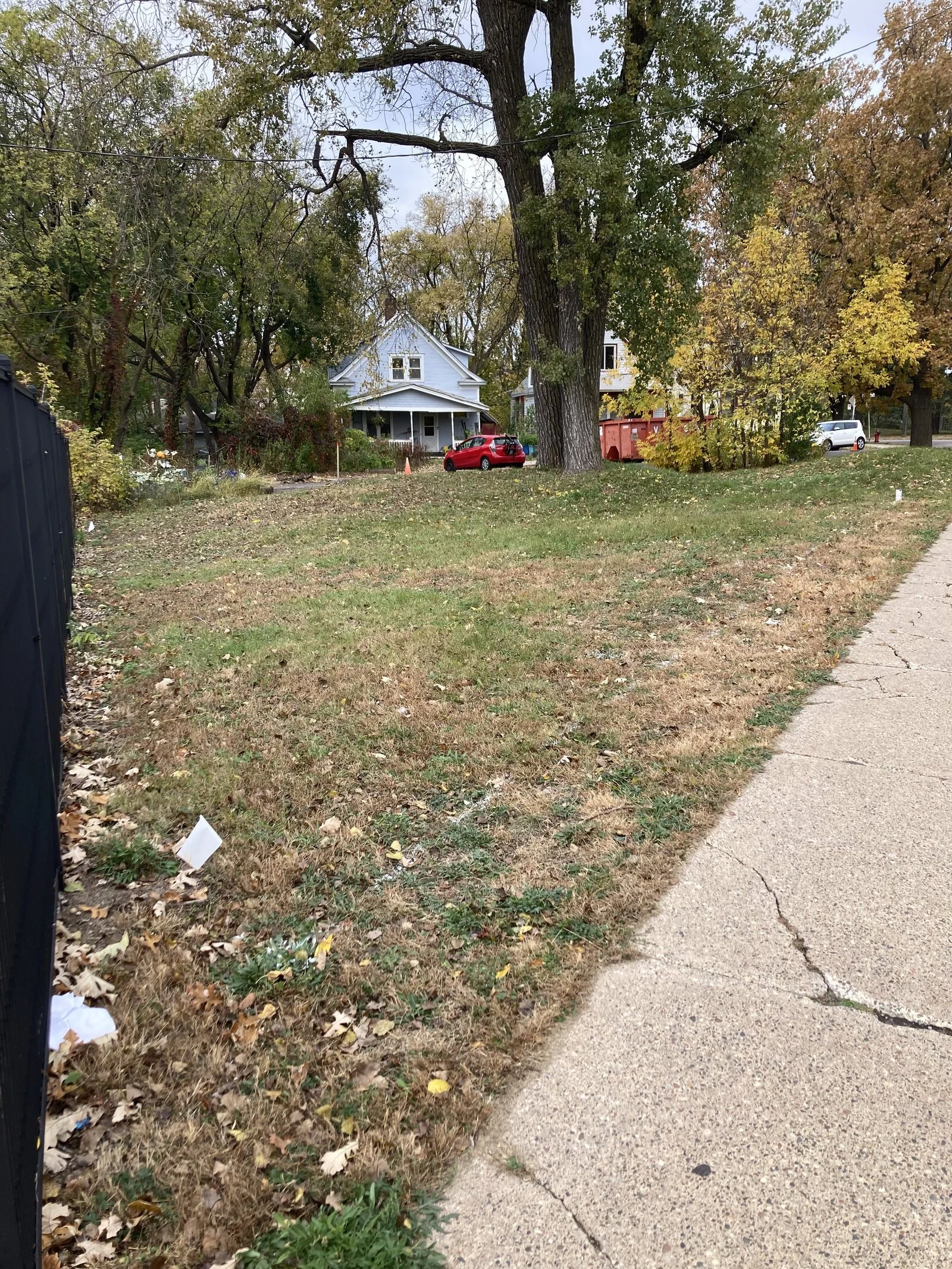
Como Park Garden 1/3
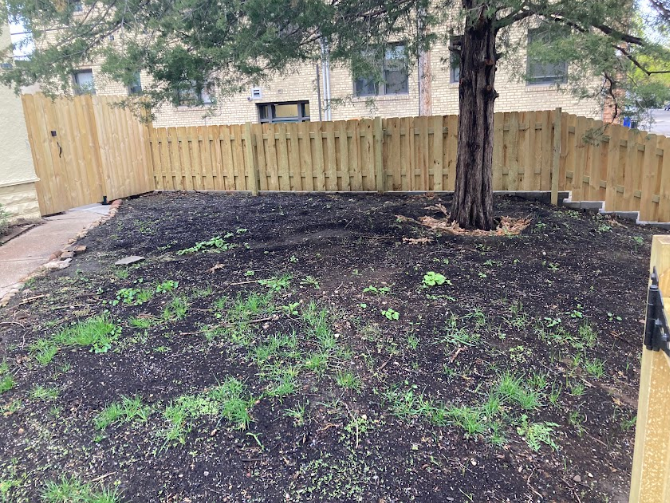
This one started with a neighbor. They reached out to District 10 Como Park about turning it into something better, they got funding together, and we came in to do the install.
-
![mini prairie]()
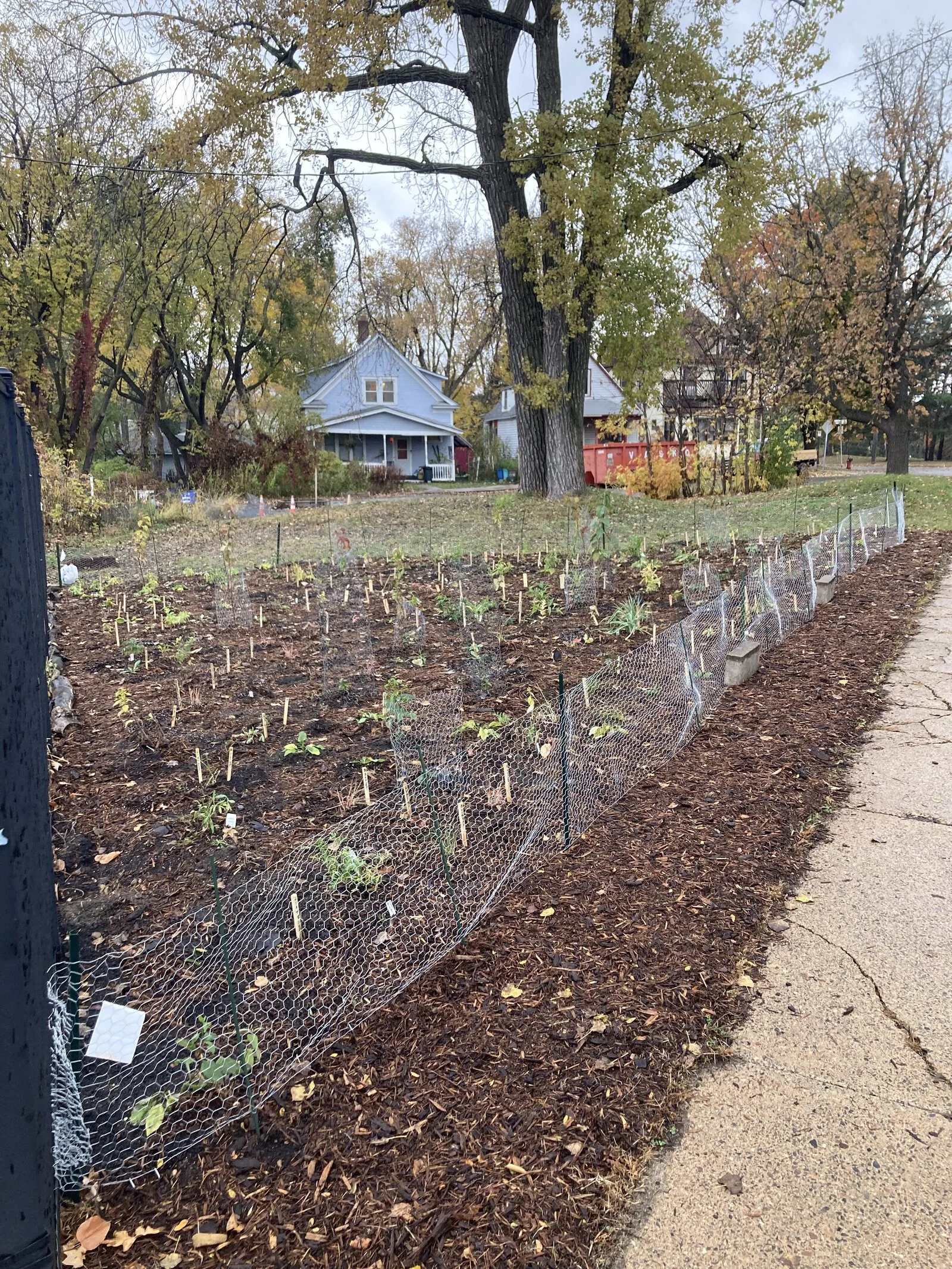
Como Park Garden 2/3
We laid mulch paper over the turf, topped it with compost and soil, and planted about 400 native plugs—35 species in all. Prairie blazing star, wild bergamot, rattlesnake master, zigzag goldenrod, plus several milkweeds. New Jersey tea and wild rose added structure throughout. We left a mulch strip along the sidewalk and fenced the rest to protect the new plantings as they establish.
-
![mini prairie]()
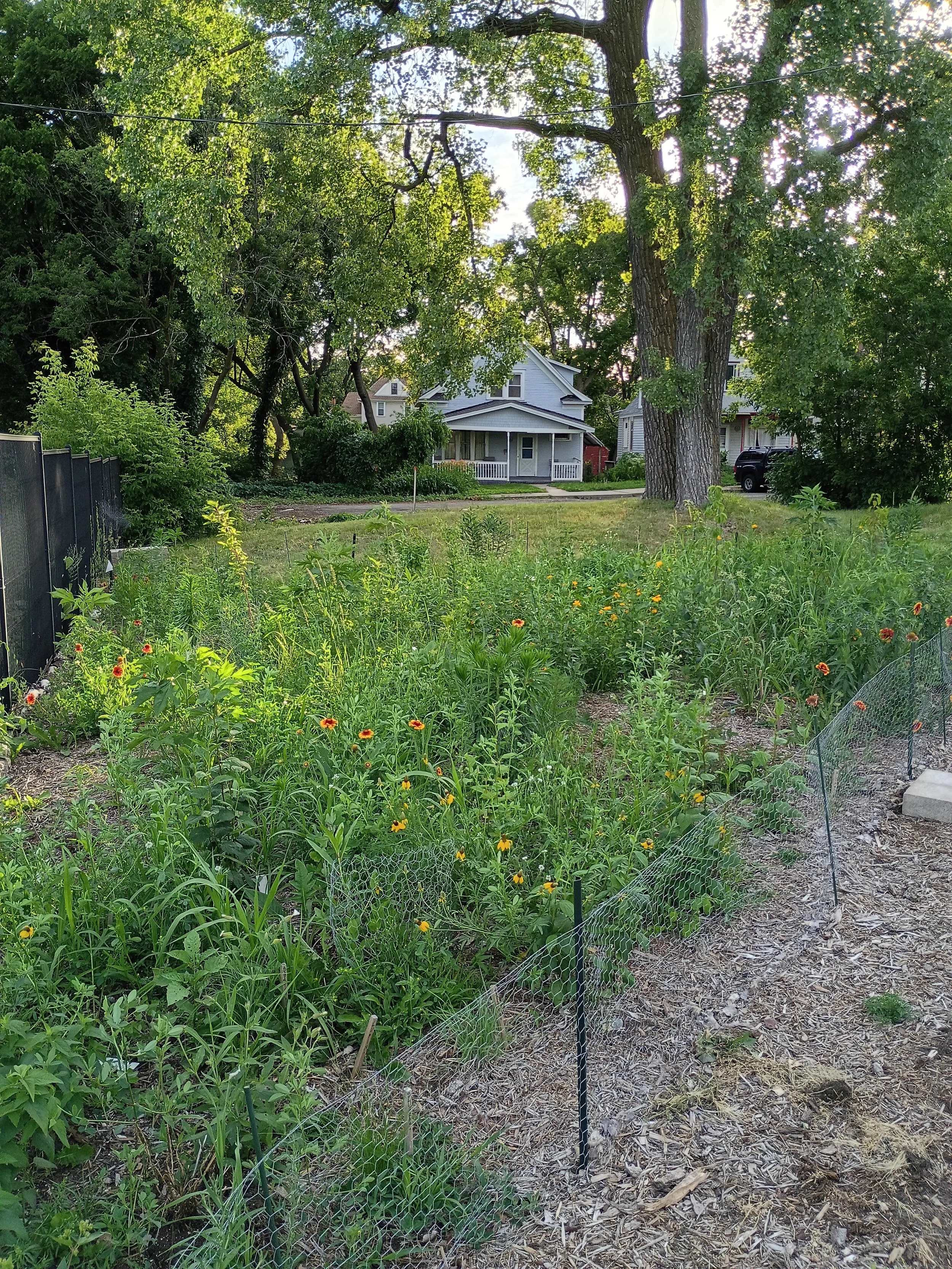
Como Park Garden 3/3
It is now a thriving pollinator patch, full of a diversity of species of plants and insects. Different species bloom across the whole summer, providing wildlife with a home and the community with beauty throughout the whole year.
-
![mini prairie]()
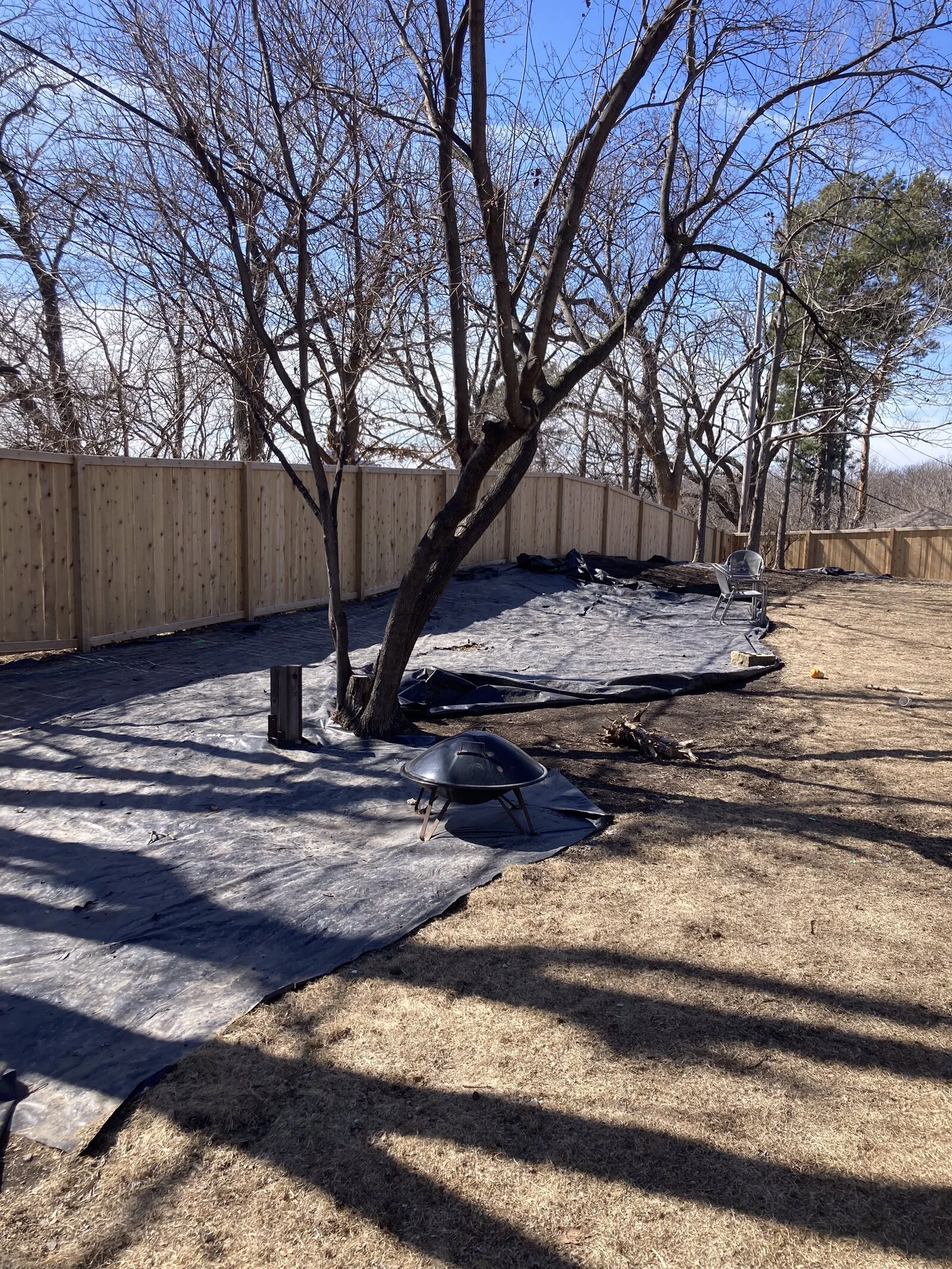
Minneapolis Backyard Rewilding 1/4
This backyard had been covered in black plastic since the previous summer, solarizing the soil to kill off an infestation of campanula and burdock. Underneath was compacted ground and years of invasive pressure. The clients wanted to restore the understory.
-
![mini prairie]()
Minneapolis Backyard Rewilding 2/4
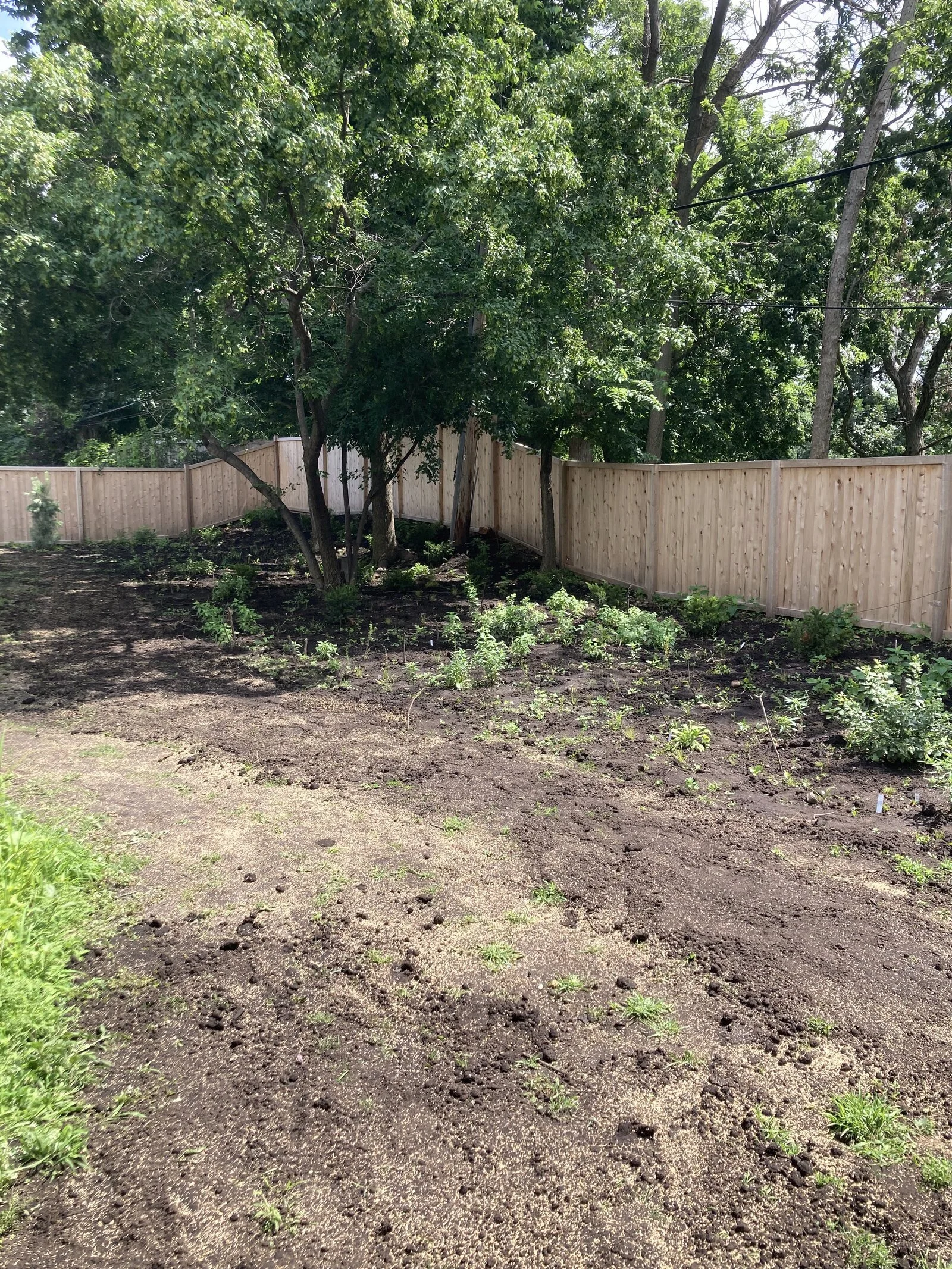
We installed over 1,200 native plugs across 3,200 square feet of garden beds, seeded with a super-diverse prairie mix. The lawn area got flipped and reseeded with eco-grass. Shrubs — fragrant sumac and yews — went in along the fence line to anchor the edges.
-
![mini prairie]()
Minneapolis Backyard Rewilding 3/4
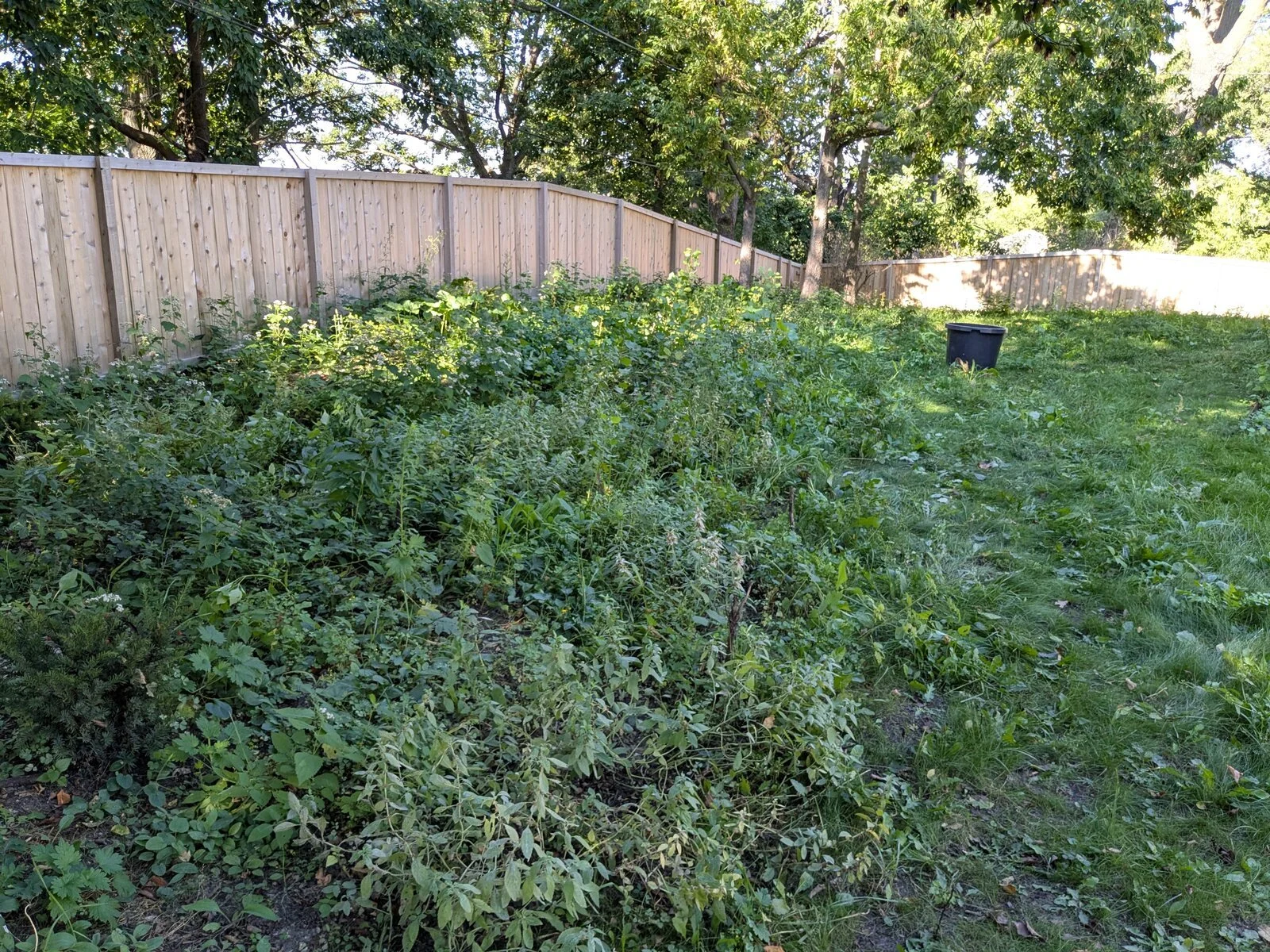
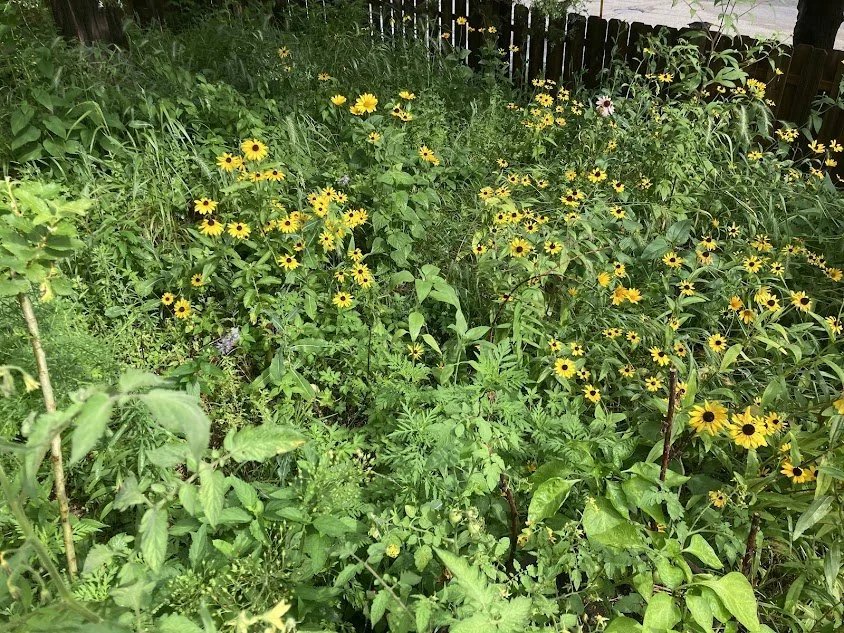
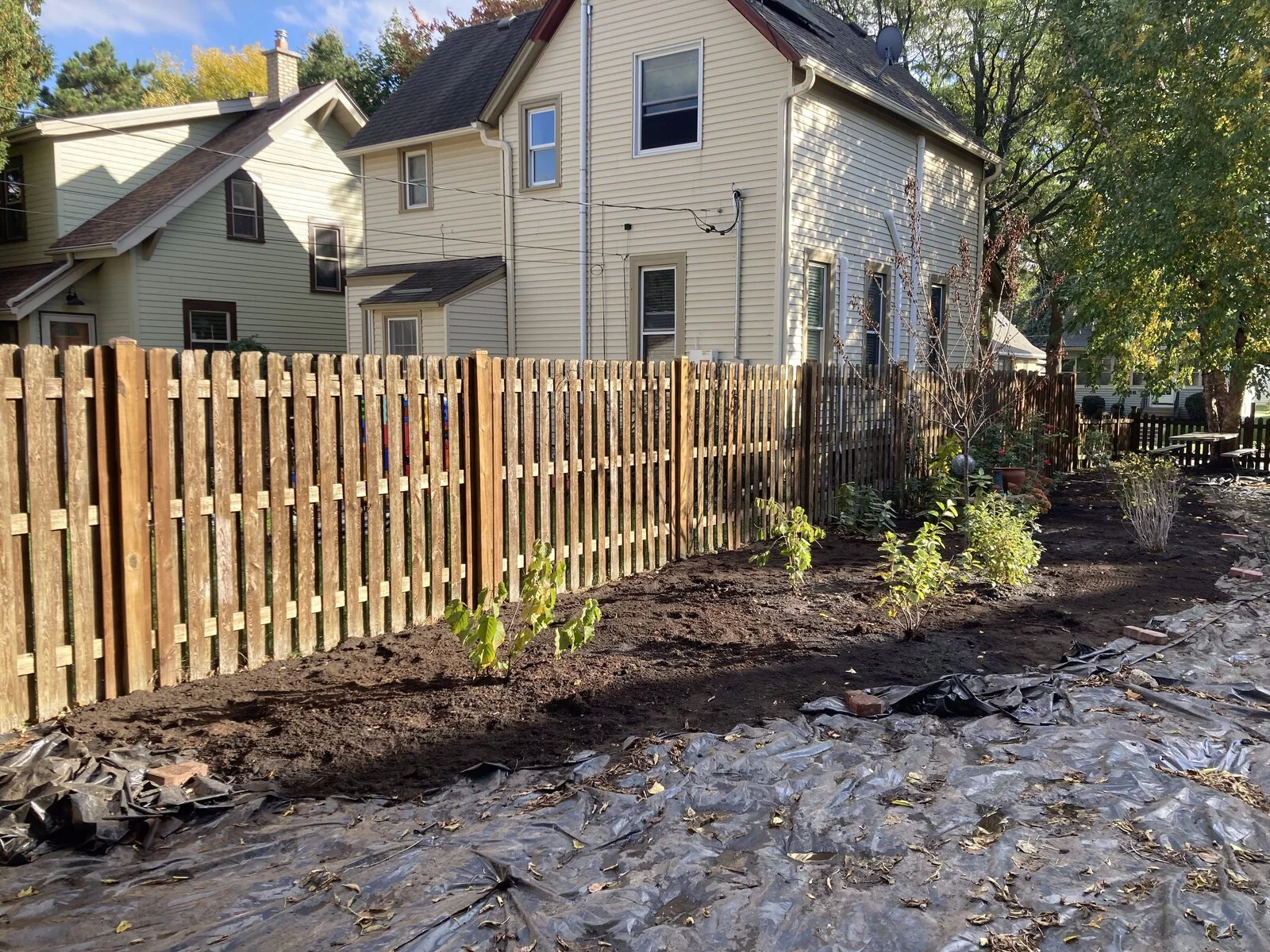
By late September, the site looked wild. To an untrained eye, maybe even weedy. But this is what ecological success looks like in year one: dense biomass, rapid fill-in, native volunteers joining the party. The campanula and burdock? Almost completely gone in a single season.
-
![mini prairie]()
Minneapolis Backyard Rewilding 4/4
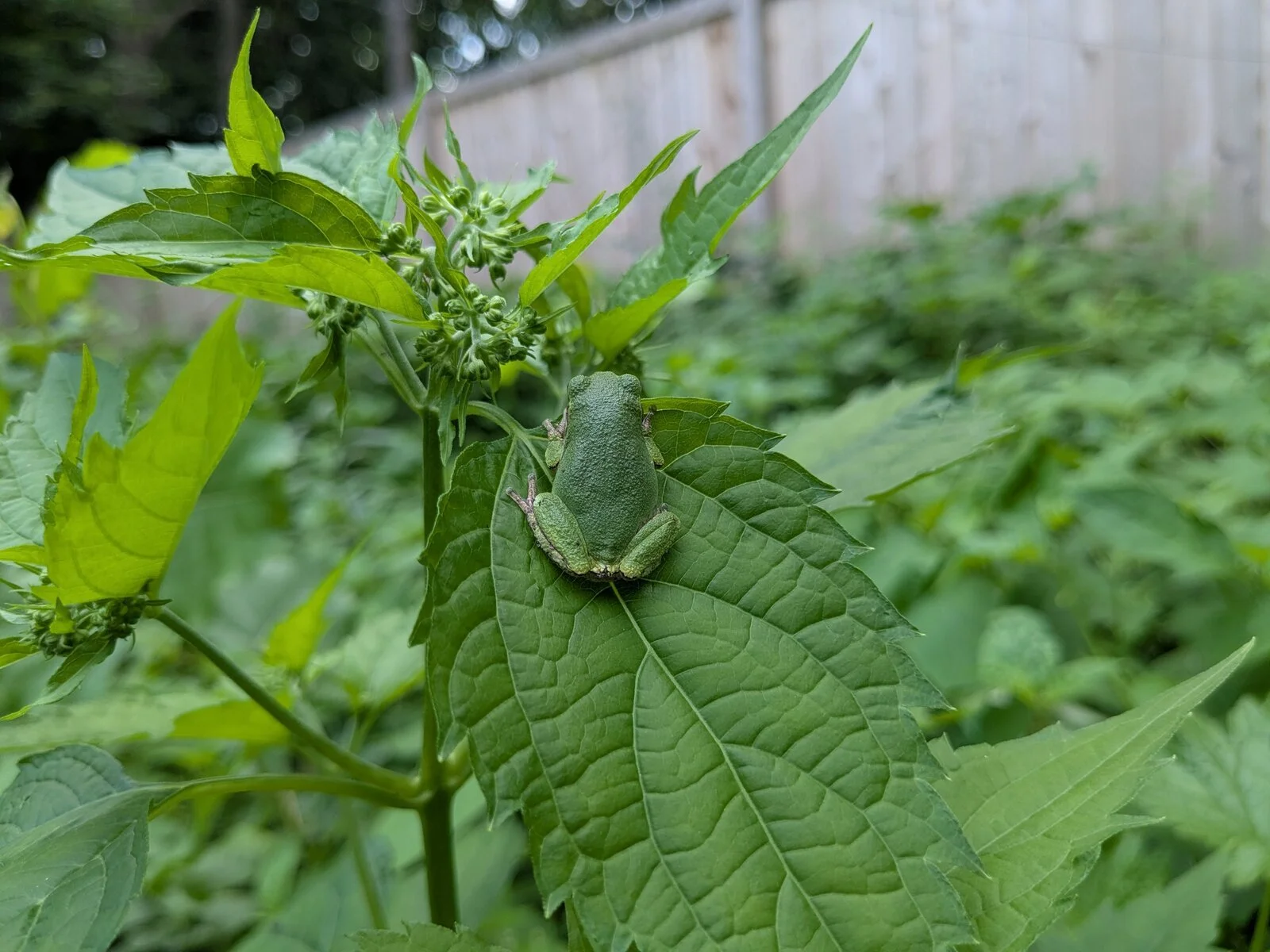
And then we found this guy — a gray tree frog perched on white snakeroot, right in the middle of the native garden. Tree frogs need specific habitat conditions: moisture, cover, insects to eat. When they show up, it means the ecosystem is working. That's the whole point.
-
![mini prairie]()
Pilot Project 1/6
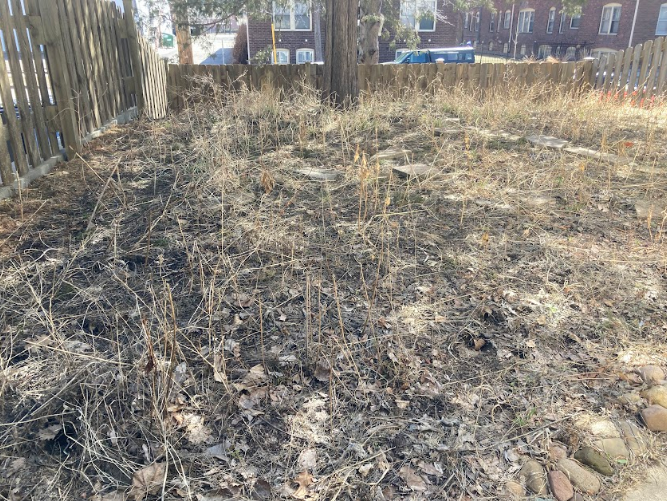
This is our pilot project. It started out as a regular grass lawn and a new retaining wall was installed, which meant bare dirt for the entire winter.
-
![mini prairie]()
Pilot Project 2/6
We added our native seed mix and amended the soil. The first year, it took a long time for plants to get established. We weren't sure if what we were doing would have the results we wanted, and things seemed to be in the "crawl" stage.
-
![mini prairie]()
Pilot Project 3/6
By the end of autumn the first signs of life were really showing. We weren't really sure if it was working, but we just had to trust the process and let it live. The yard seemed to be in the "walk" stage.
-
![mini prairie]()
Pilot Project 4/6
By the end of the following spring, we could see that it just takes a little bit of time and that the process definitely works! We were officially in the "run" stage.
-
![mini prairie]()
Pilot Project 5/6
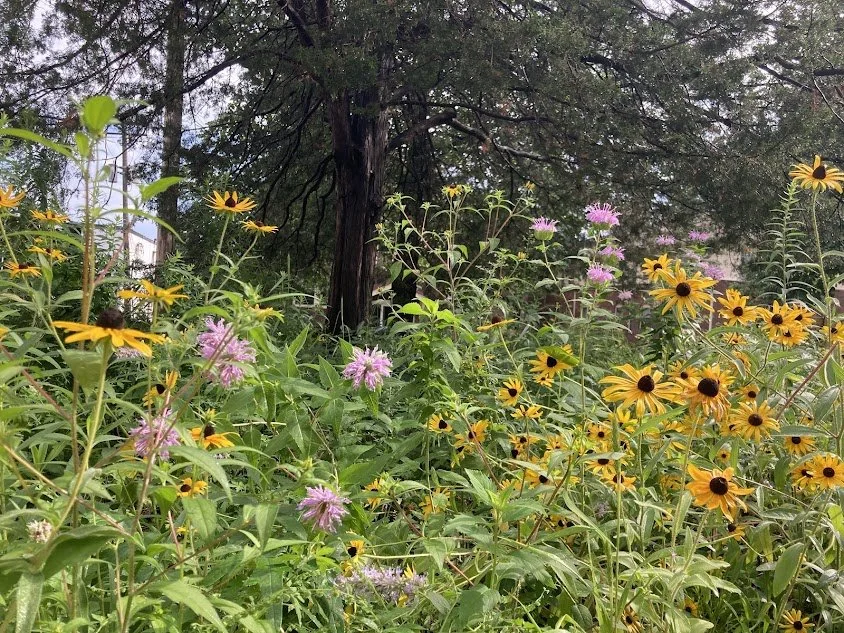
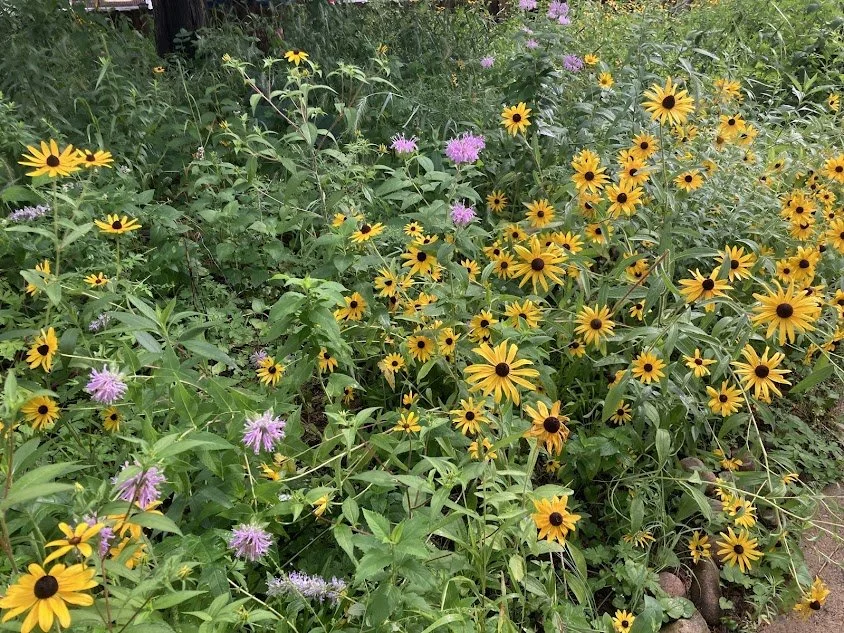
The lawn was completely transformed into a healing understory filled with food for all manner of life. Bee balm, native bellflowers, and black eyed susans covered the yard. We began to understand that this process was reliable if you just give it time.
-
![mini prairie]()
Pilot Project 6/6
This is what success looks like. The dense mix and tall height is closer to how the local ecosystem would have actually originally looked and provides food, water, and shelter. And the cherry on top is it's so much more beautiful than lawn.
-
![mini prairie]()
St. Paul Burdock Replacement 1/3
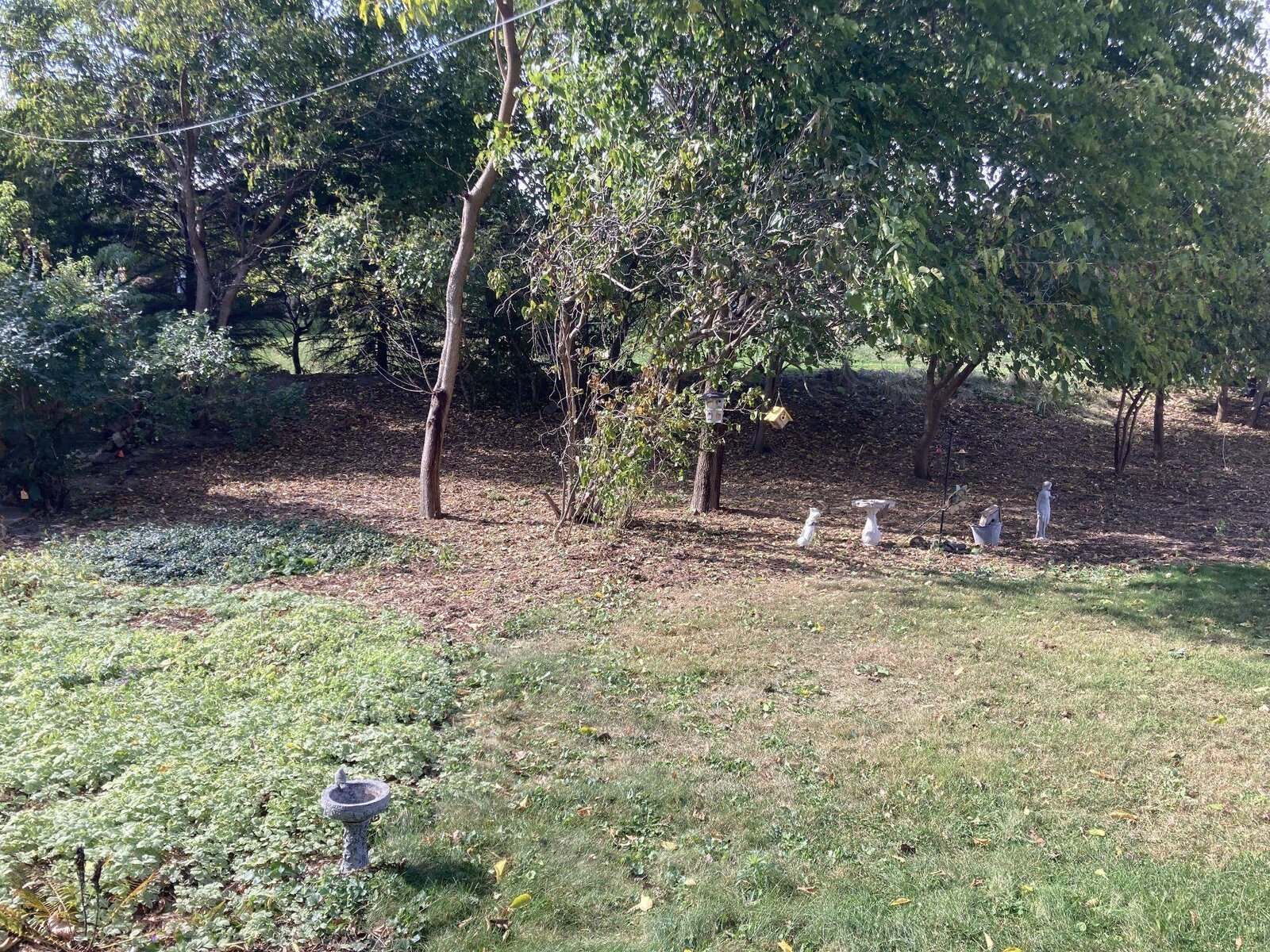
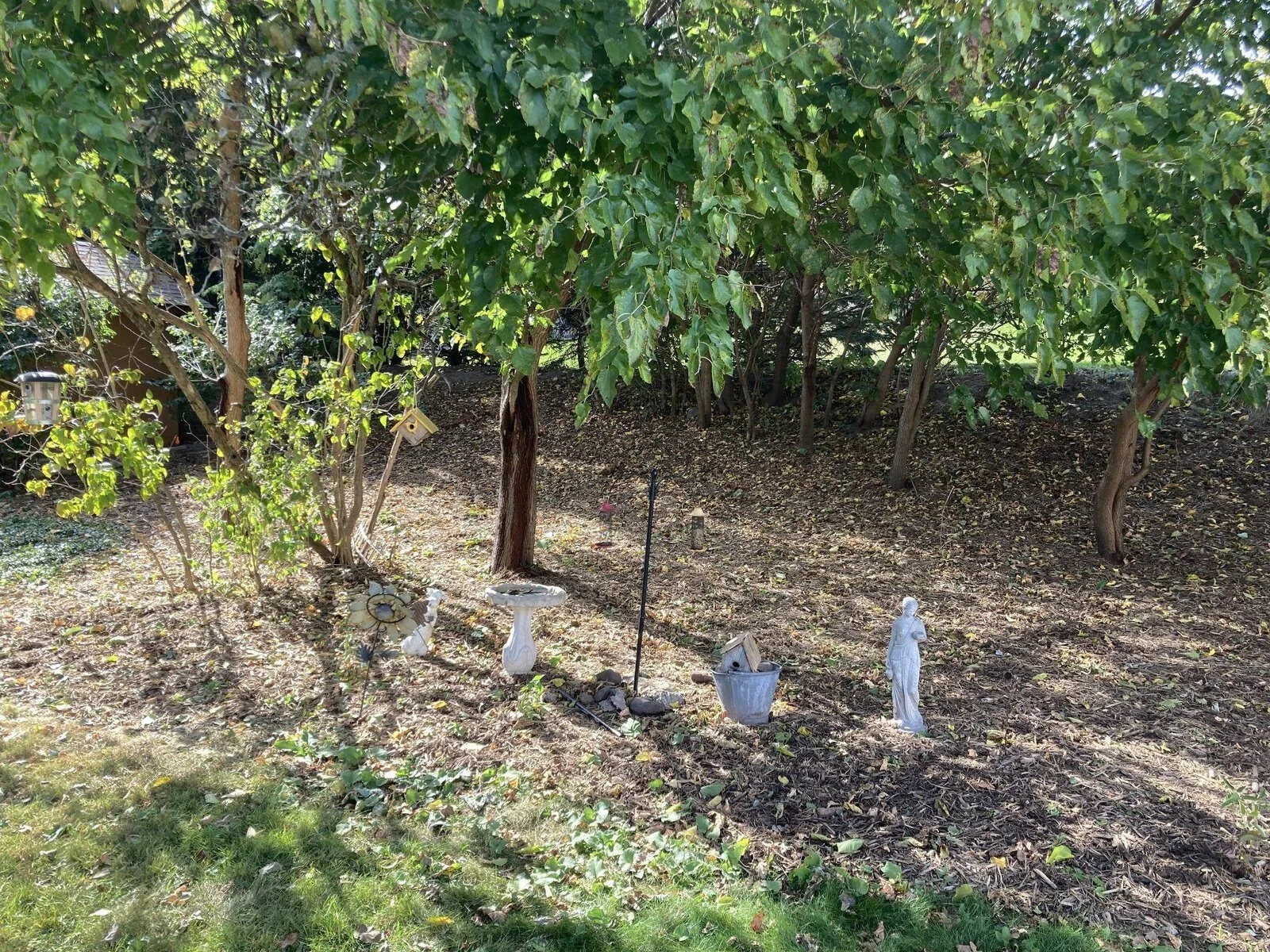
This backyard has mature trees shading a south facing hill. Burdock had taken over the understory, crowding out anything else trying to grow. The owner wanted a space that felt intentional without losing its woodland character.
-
![mini prairie]()
St. Paul Burdock Replacement 2/3
We cleared the burdock and let the understory grow in. Mulch, elderberry shrubs, and native plugs replaced the invasive thicket. Now there's room for ferns and shade-tolerant natives to fill in over time.
-
![mini prairie]()
St. Paul Burdock Replacement 3/3
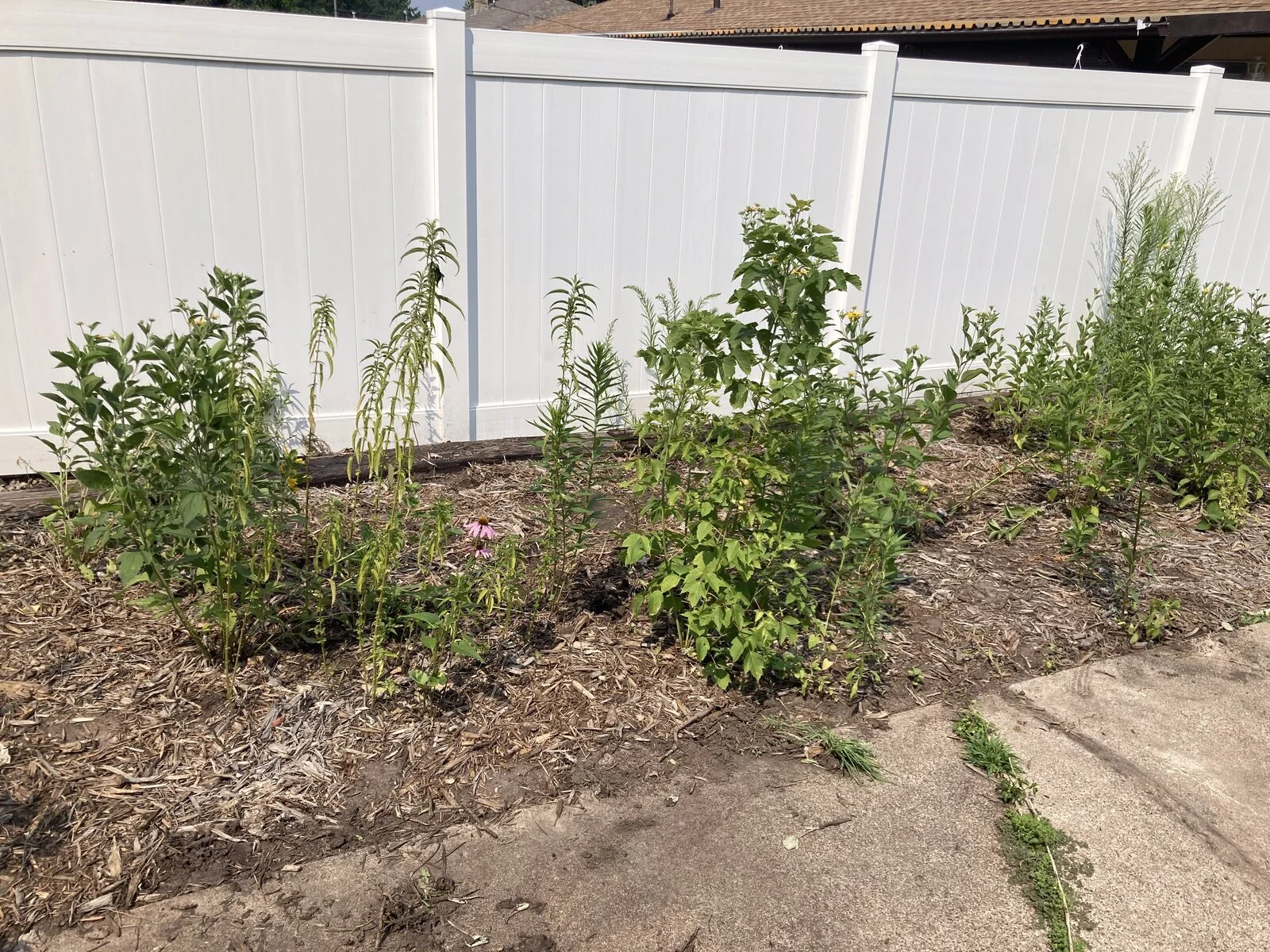
Along the back fence, a planting strip went from bare mulch to blooming natives in one season. Purple coneflower, obedient plant, and a mix of prairie species are replacing the burdock.
-
![mini prairie]()
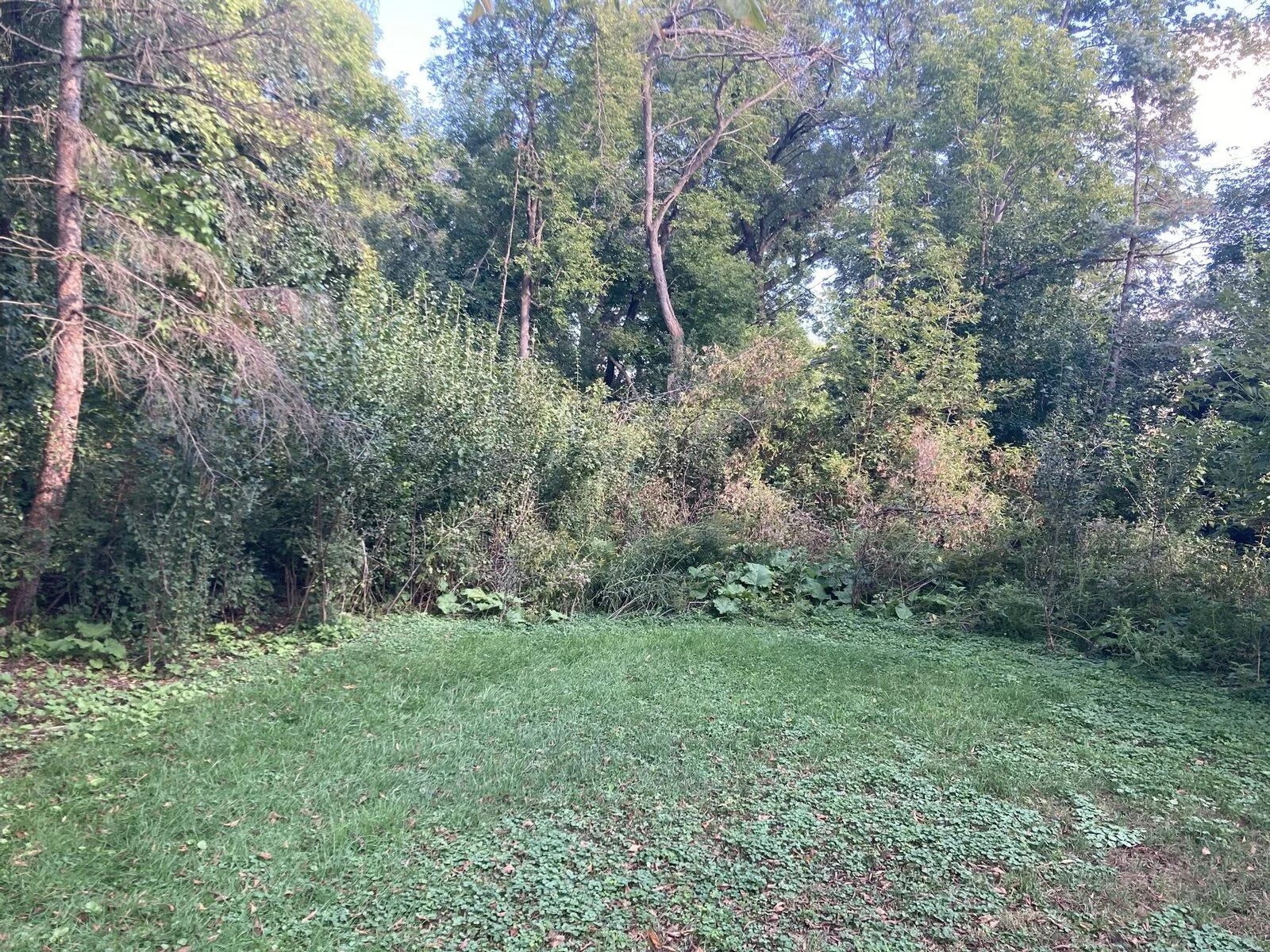
St. Paul Buckthorn Removal 1/3
This hillside was buried under 5,500 square feet of buckthorn, some twenty-five feet tall. You couldn't walk or see through it. When we finally cut our way in, we found the cause: no soil. Just landscape fabric and gravel right at the surface. We cleared the thicket over a few days, chipping the smaller branches on-site and salvaging the larger logs. Those logs became the bones of the restoration.
-
![mini prairie]()
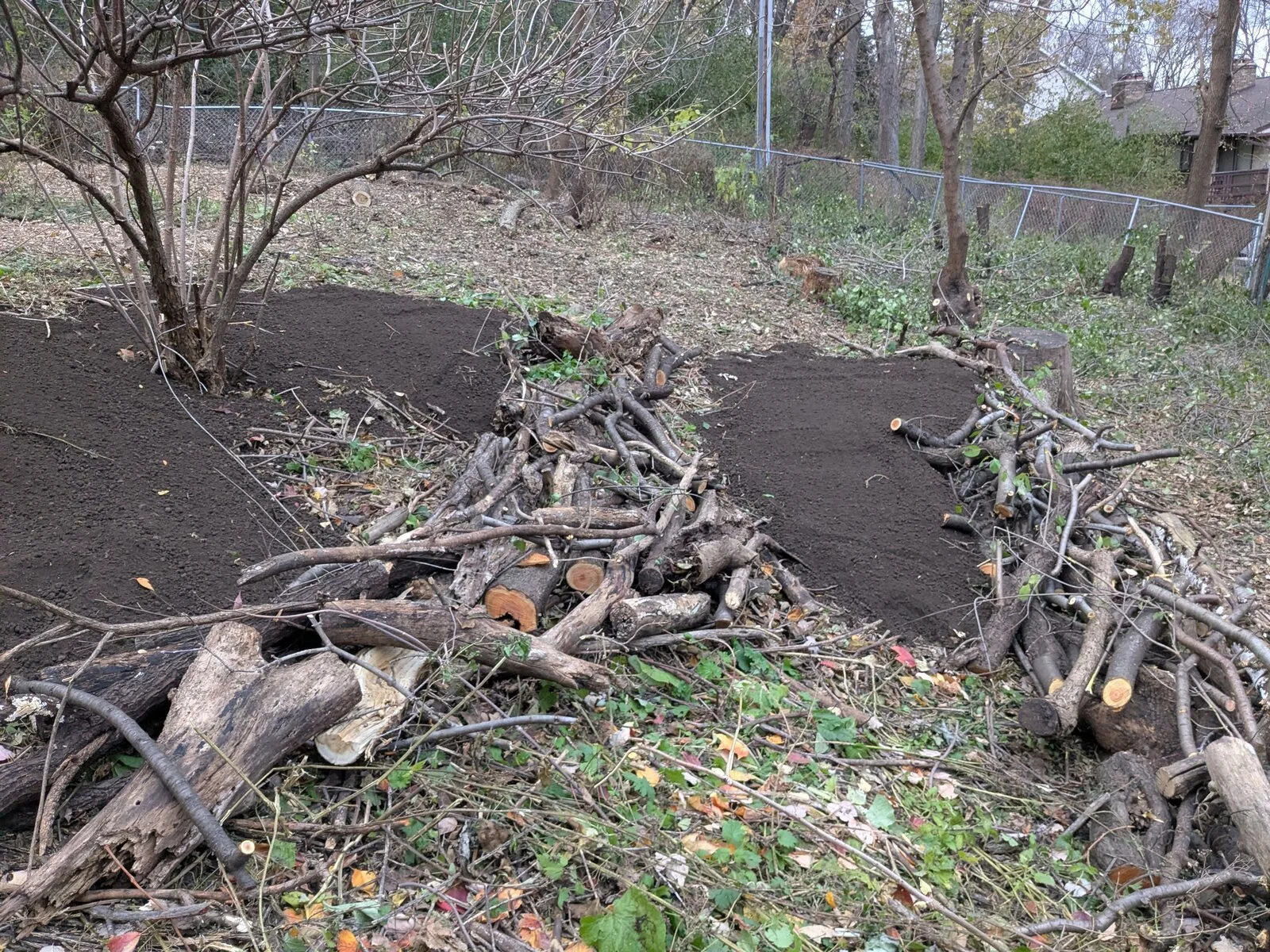
St. Paul Buckthorn Removal 2/3
We stacked salvaged buckthorn into retaining walls along the slope and backfilled with topsoil to form small terraces. On the flat gravel area, we laid wood chips, mulch paper, compost, and topsoil to build new soil. We planted ~300 plugs, 50 one-gallons, and 22 shrubs. Wild indigo and other nitrogen-fixers went in the gravel zone, and the whole site was seeded with a grass-heavy mix to suppress buckthorn.
-
![mini prairie]()
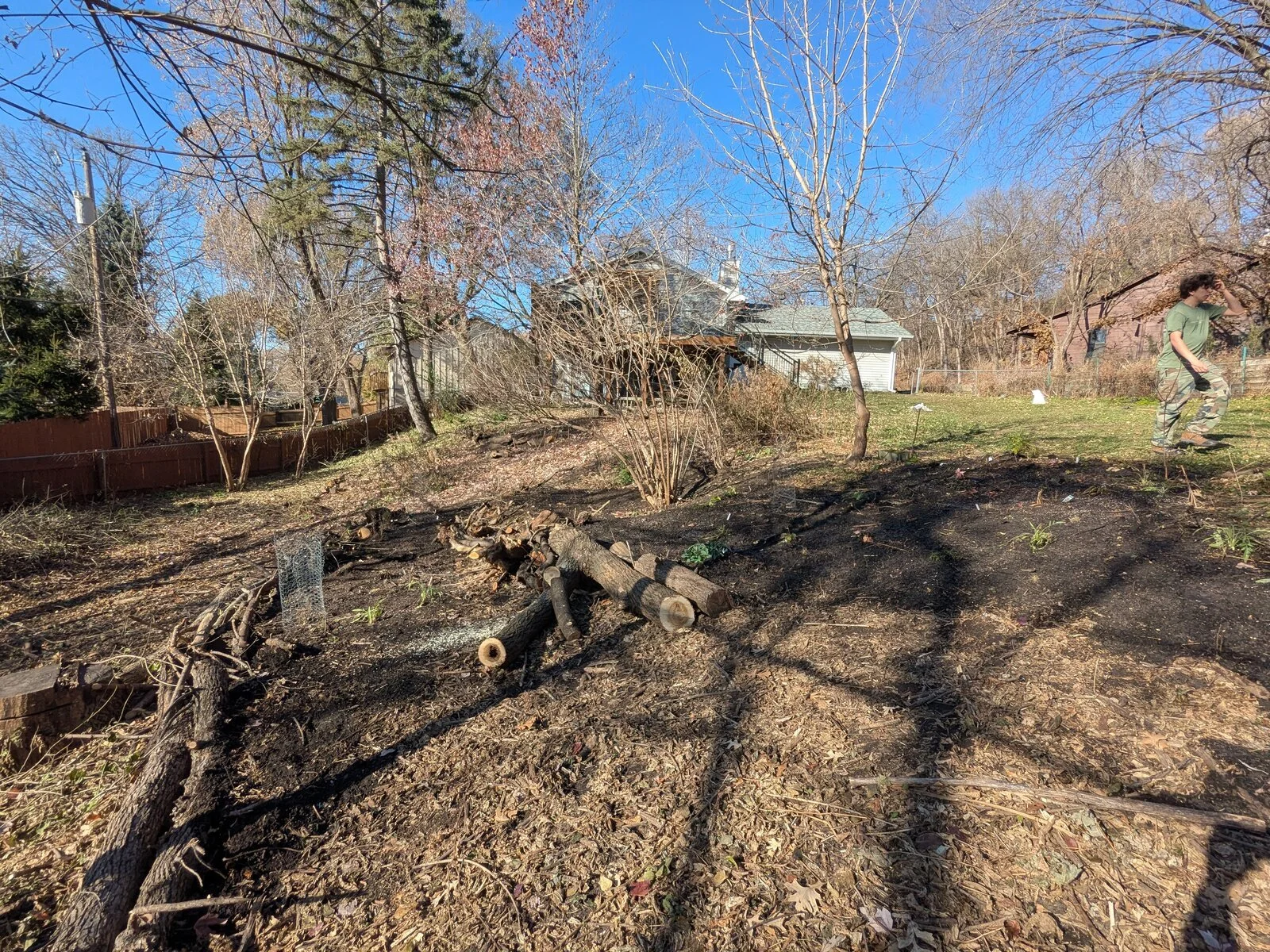
St. Paul Buckthorn Removal 3/3
We kept everything native that was already there—a stand of prickly ash, some elderberries, a few box elders holding the slope. By next summer, this hillside will be filling in with native grasses and forbs instead of buckthorn.
-
![mini prairie]()
Saving a Rain Garden 1/4
A neighbor dispute put this rain garden in limbo. The planting spanned the property line between two homes, and the neighbor wanted their portion removed. Our client had invested years in establishing these natives and didn't want to lose them.
-
![mini prairie]()
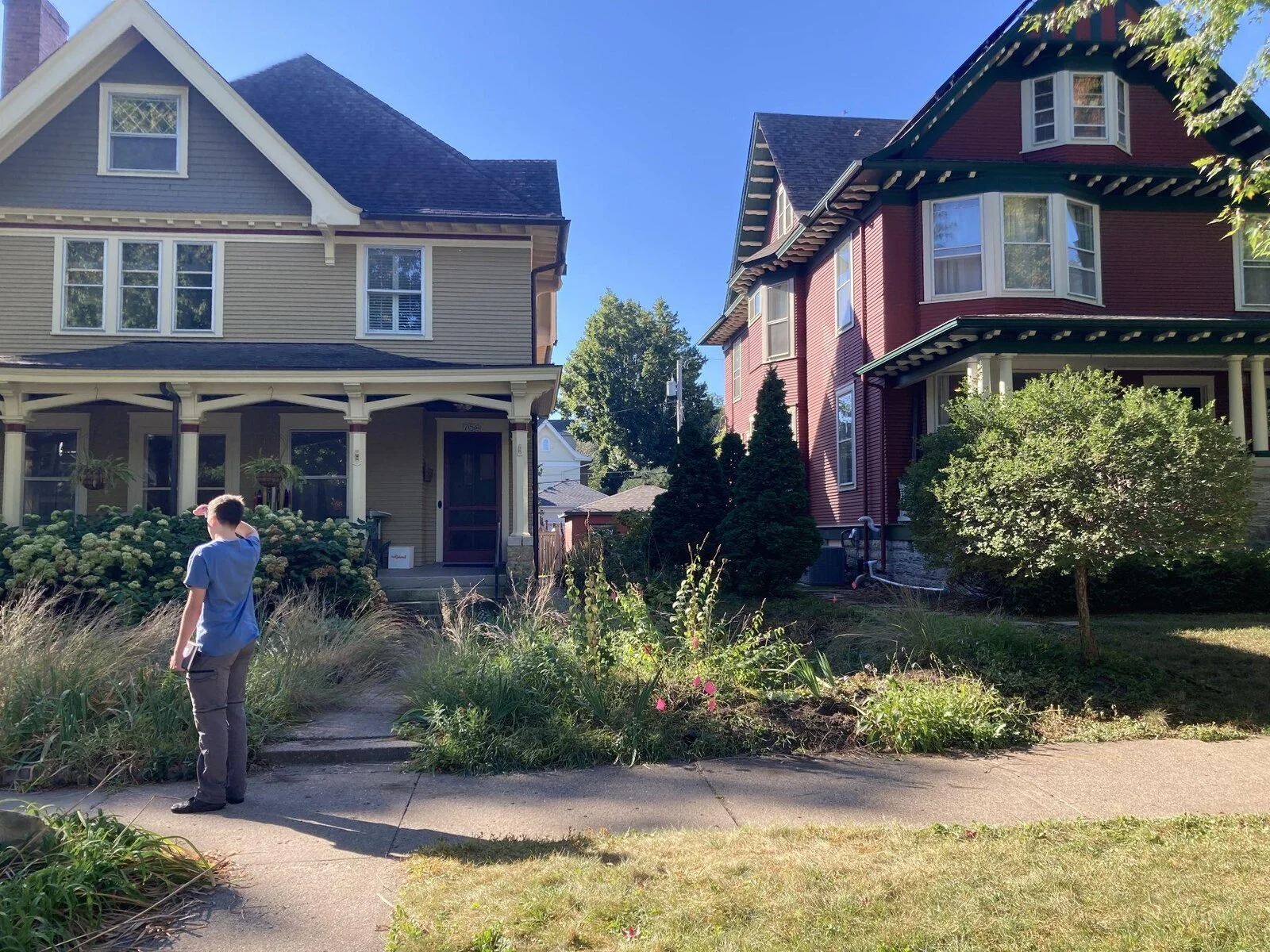
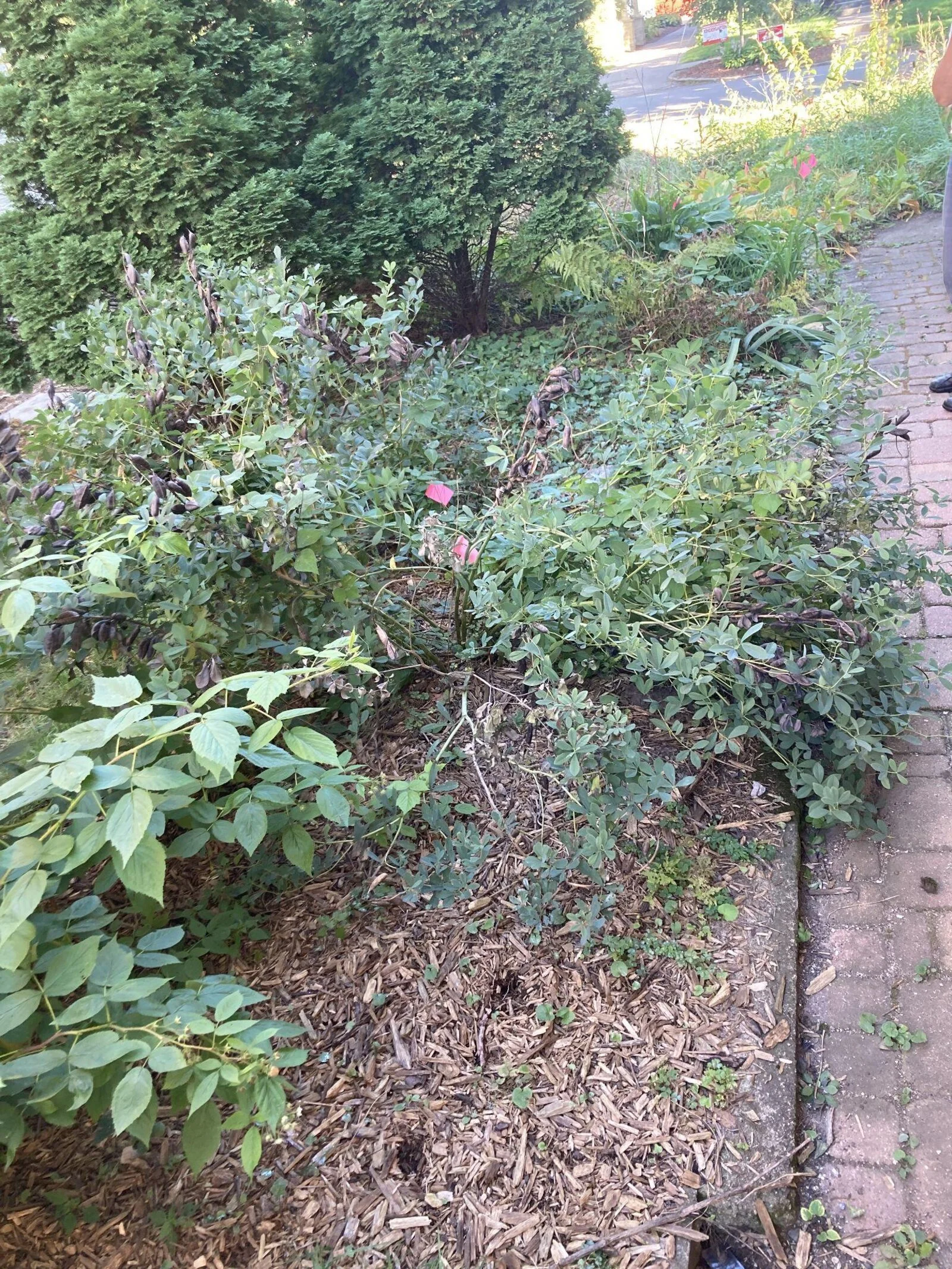
Saving a Rain Garden 2/4
We marked every salvageable plant with pink flags: native grasses, sedges, perennials that had taken hold in the rain garden over the years. In fall 2024, we carefully dug them out and transplanted them to a depression on the north side of the house.
-
![mini prairie]()
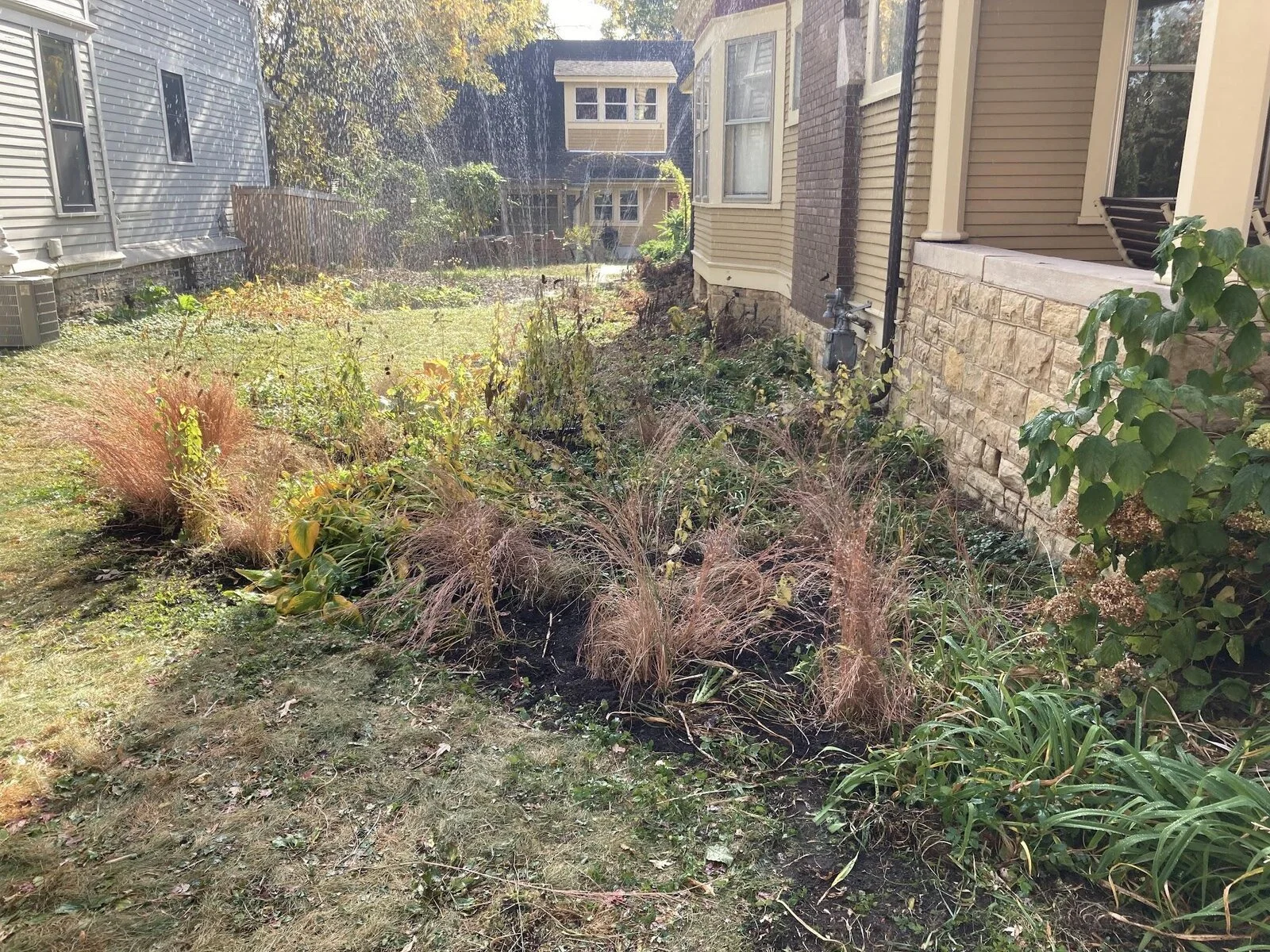
Saving a Rain Garden 3/4
The transplants took. By the following fall, the same native grasses that would have been lost to the property line dispute had filled in along the side yard.
-
![mini prairie]()
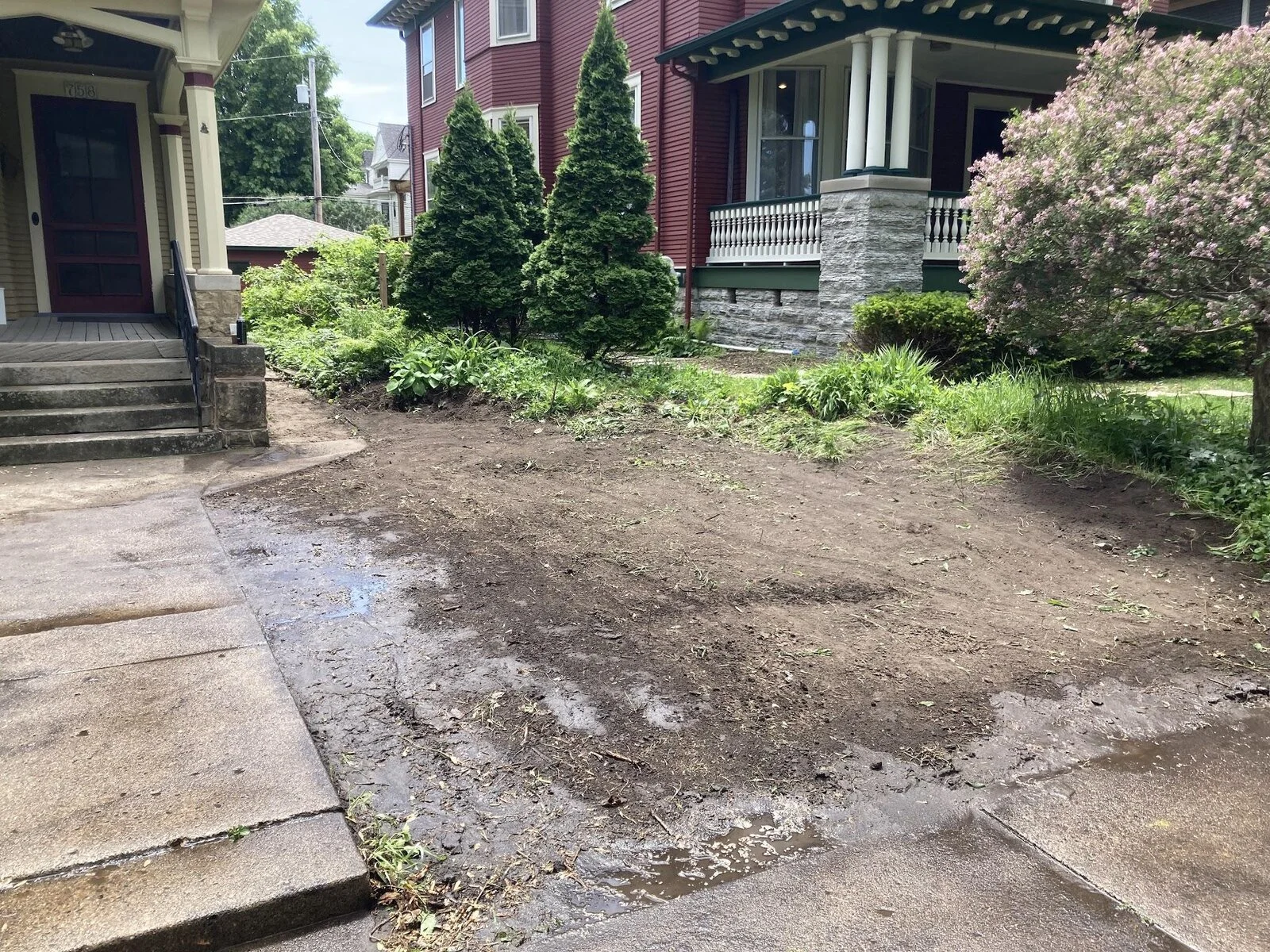
Saving a Rain Garden 4/4
With the plants saved, we filled in the old rain garden and regraded the area to drain toward the street. Sometimes our work means creating habitat, sometimes it means preserving what's already there.
-
![mini prairie]()
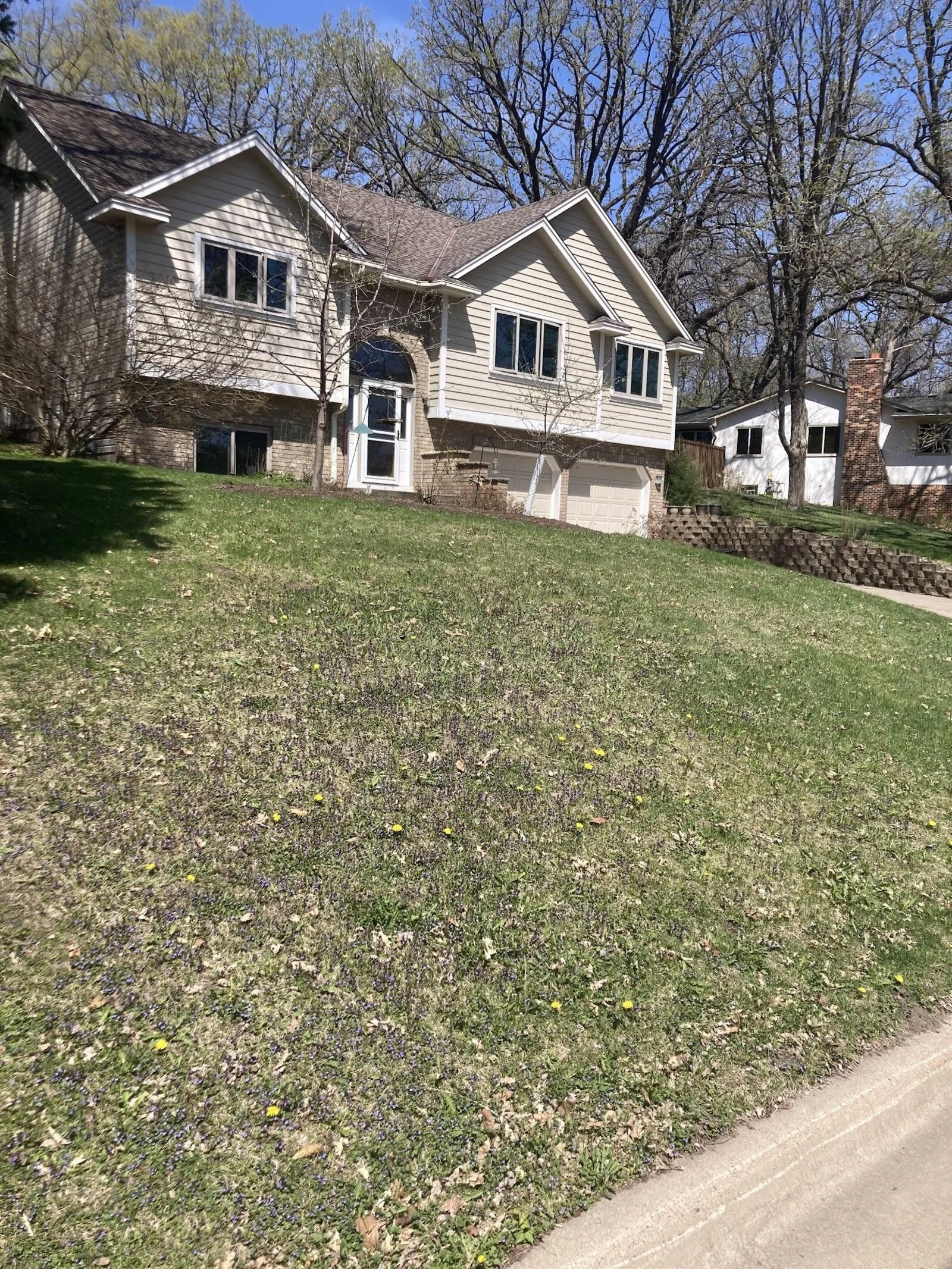
Lawn Replacement 1/2
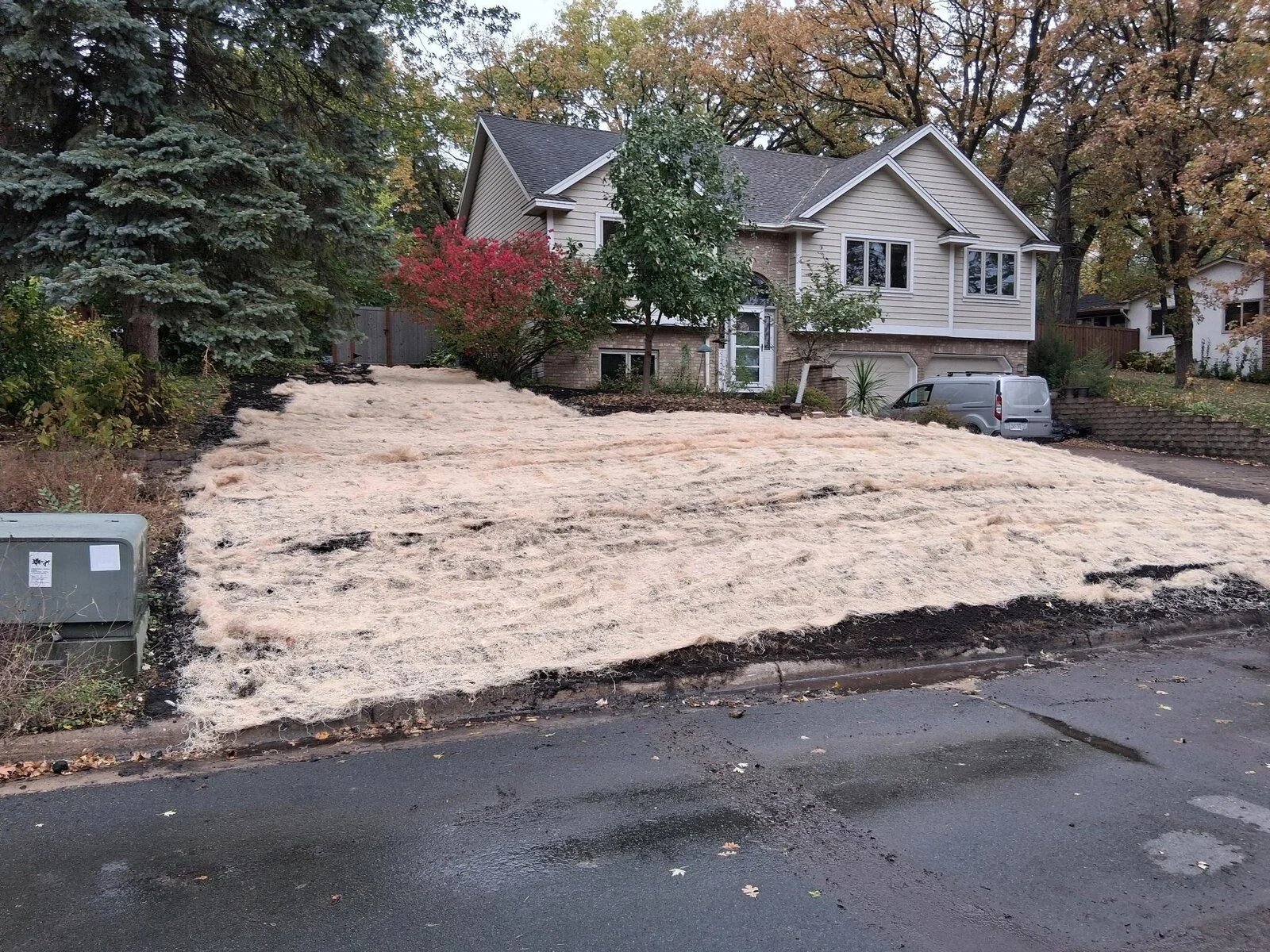
This yard was covered in 5,500 sq ft of non-native grass. We solarized it for the summer and prepared to introduce a native seed mix and fresh healthy soil.
-
![mini prairie]()
Lawn Replacement 2/2
The blankets hold the seeds and soil in place while everything germinates and will break down over the first year or two as the prairie roots establish and take over that job. By next summer, prairie will be pushing through the blankets. It's still in the crawl stage, and we will update as this project blooms.
-
![A small backyard garden with dry, fallen leaves covering the ground, and with some sparse plants and dried vines. There is a wooden plank and a rock on the ground, a terracotta pot, and a trellis against the house with shadows cast on the house wall. The house has a screened porch with windows and a porch railing.]()
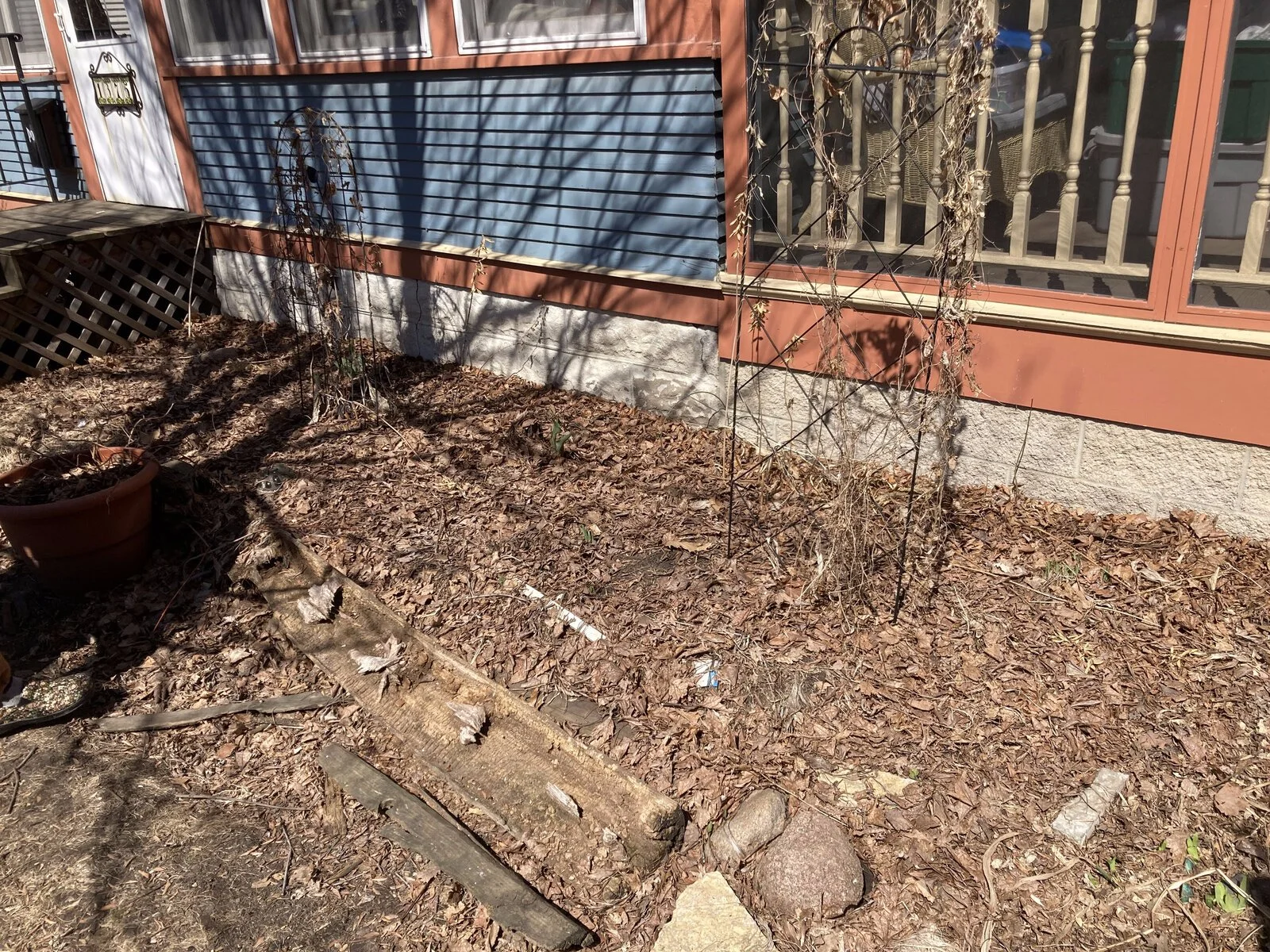
Restorative Yard Upgrade 1/5
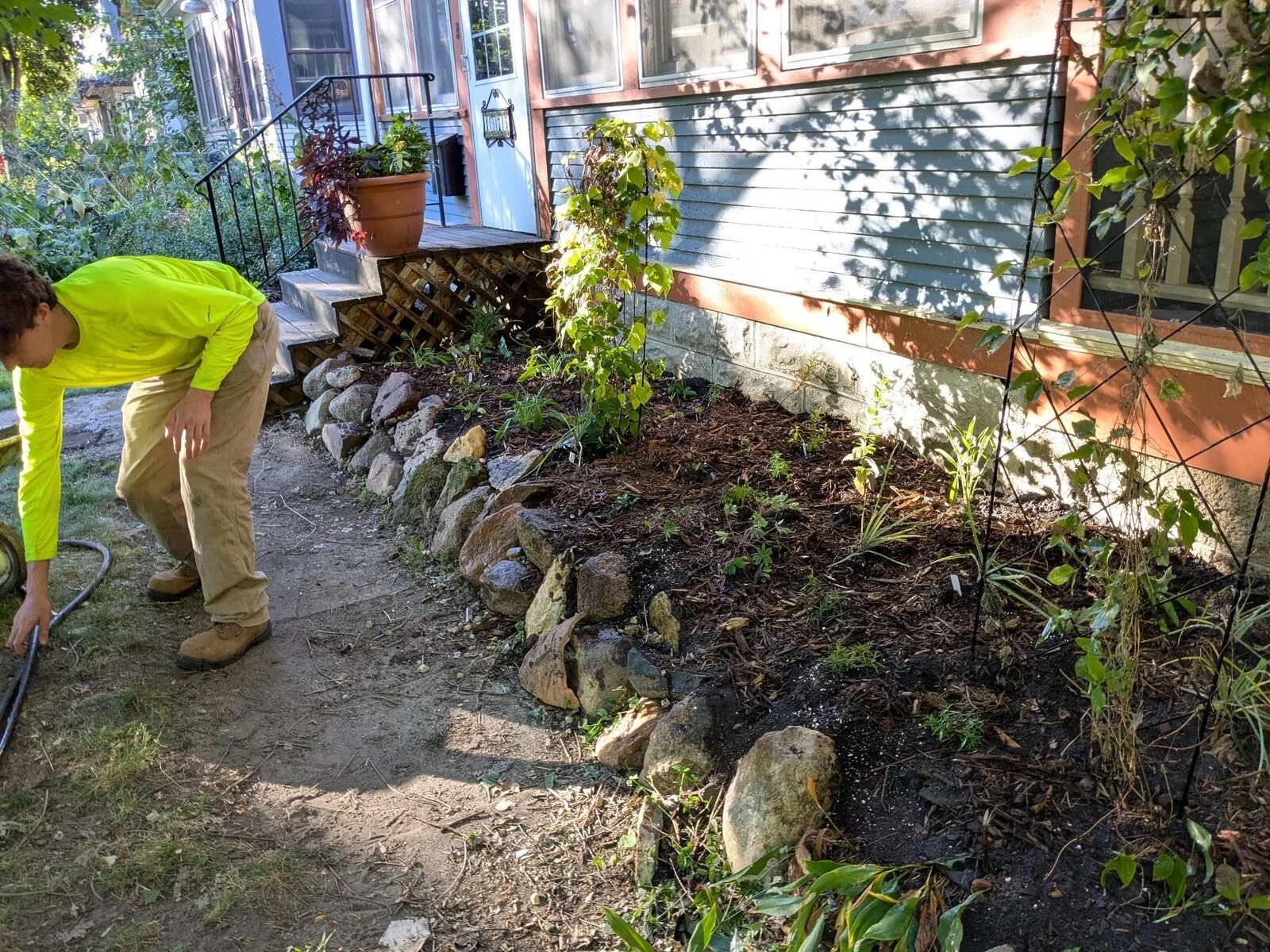
This project began in the front yard, where the raised beds made of old railroad ties had deteriorated and no plants were growing. The side yard was a struggling lawn with several large trees shading large portions, and every spring the backyard became a muddy mess where our client walked to tend to their chickens.
-
![mini prairie]()
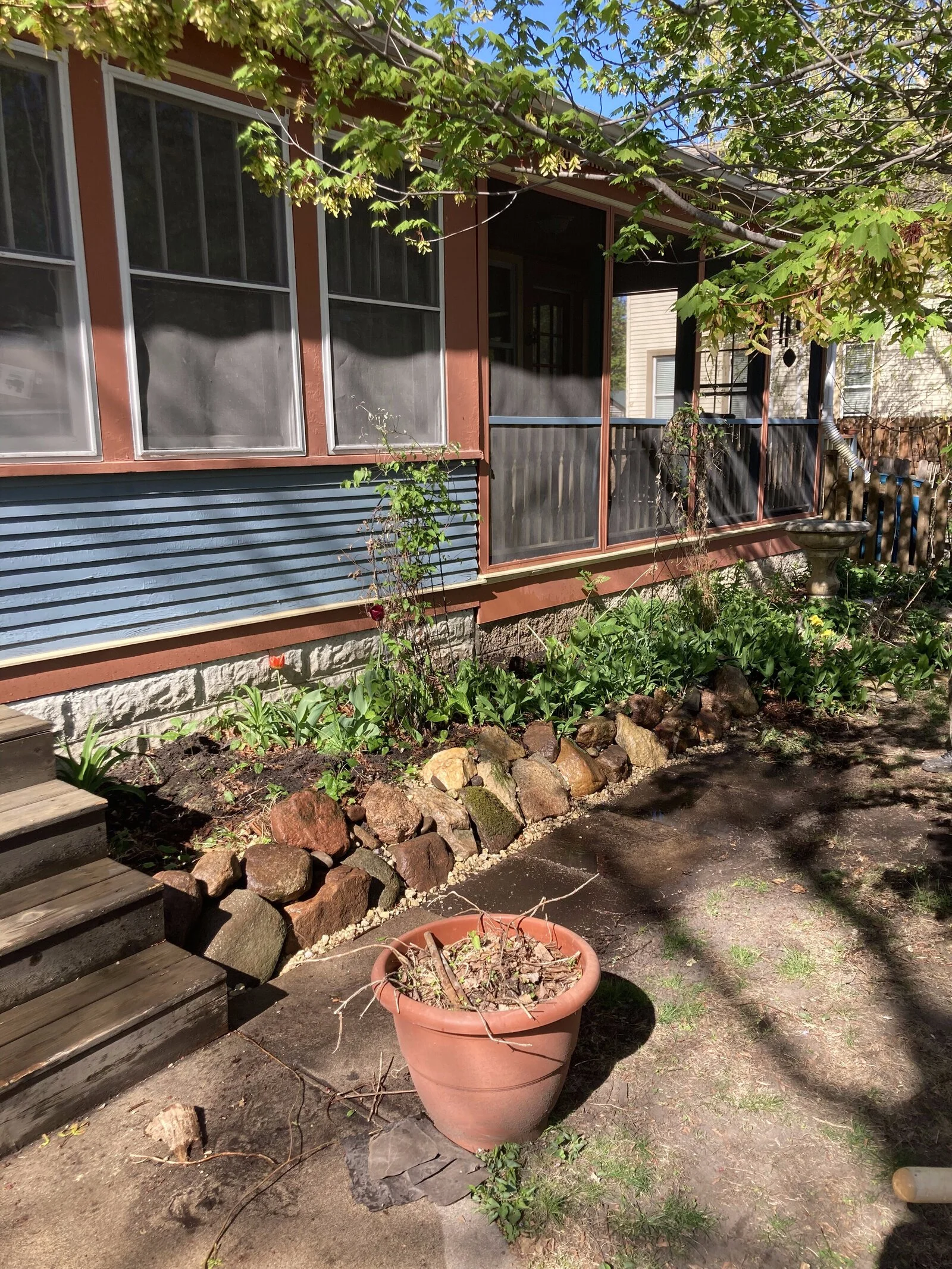
Restorative Yard Upgrade 2/5
Phase one focused on swapping the old timber borders for rock edging and tarping the creeping charlie through summer. By October, phase two kicked in. We planted winterberry, hazelnut, and serviceberry along the fence, added 20+ native plug species up front, and finished with a Short & Showy seed mix in the open spaces.
-
![mini prairie]()
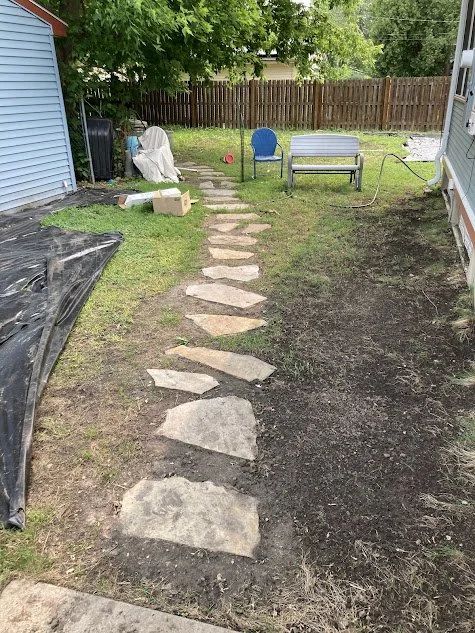
Restorative Yard Upgrade 3/5
We added a stone path to the side yard to help with the mud problem in the spring. Once everything started to dry out, we began solarizing the yard to prepare for our bee lawn installation
-
![mini prairie]()
Restorative Yard Upgrade 4/5
We also supplied materials for the owners to convert part of their lawn to bee lawn themselves. Being able to help people improve their lawns themselves is rewarding.
-
![mini prairie]()
Restorative Yard Upgrade 5/5
Now that we had completely removed the creeping charlie and amended the soil, it was time to install the plugs in the side yard. We opted for larger shrubs to provide some privacy and create a microbiome that would protect the smaller native species while they establish. We will update you with the results in the beginning of Summer 2026!
-
![mini prairie]()
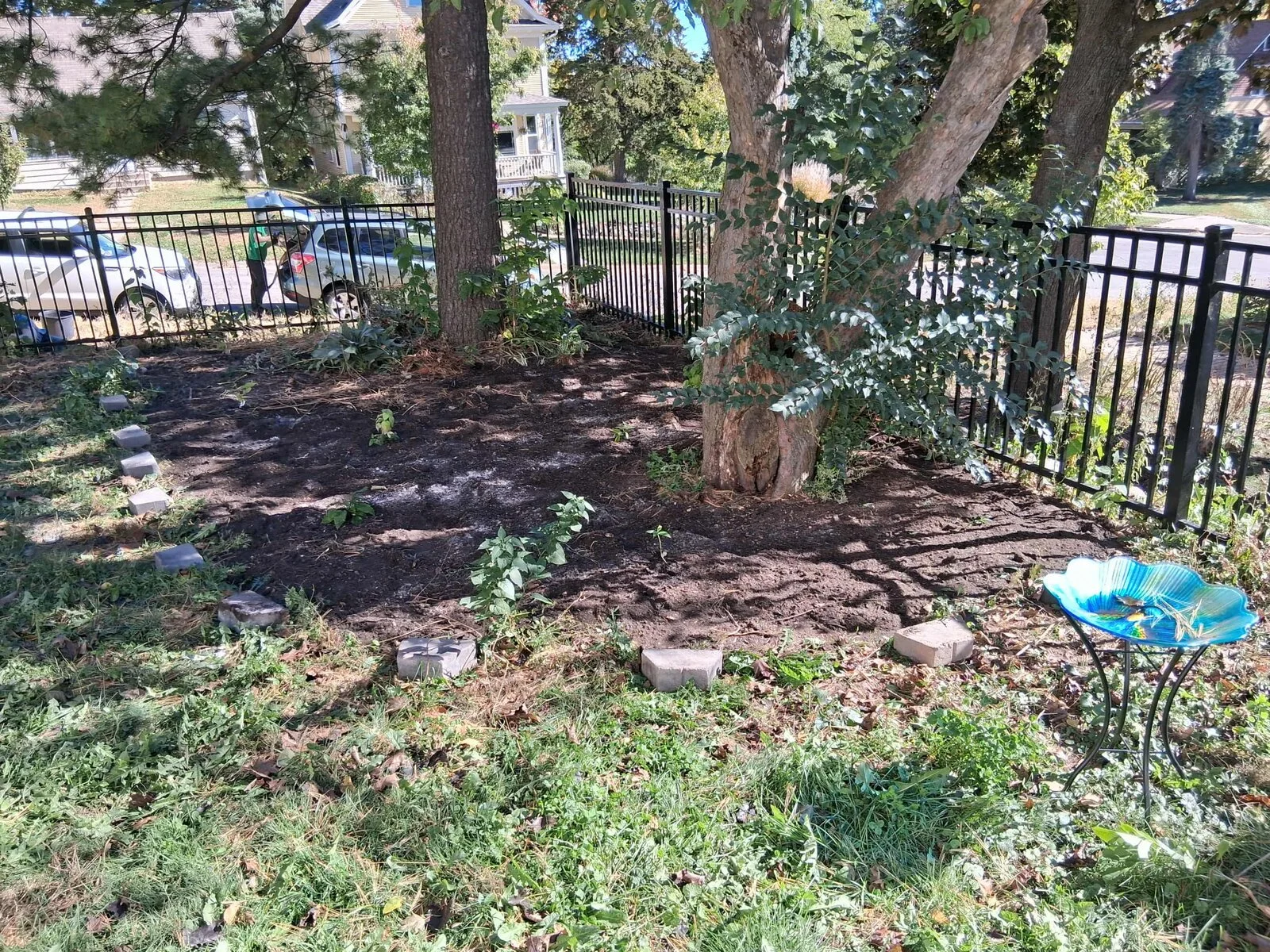
Lawns to Legumes 1/3
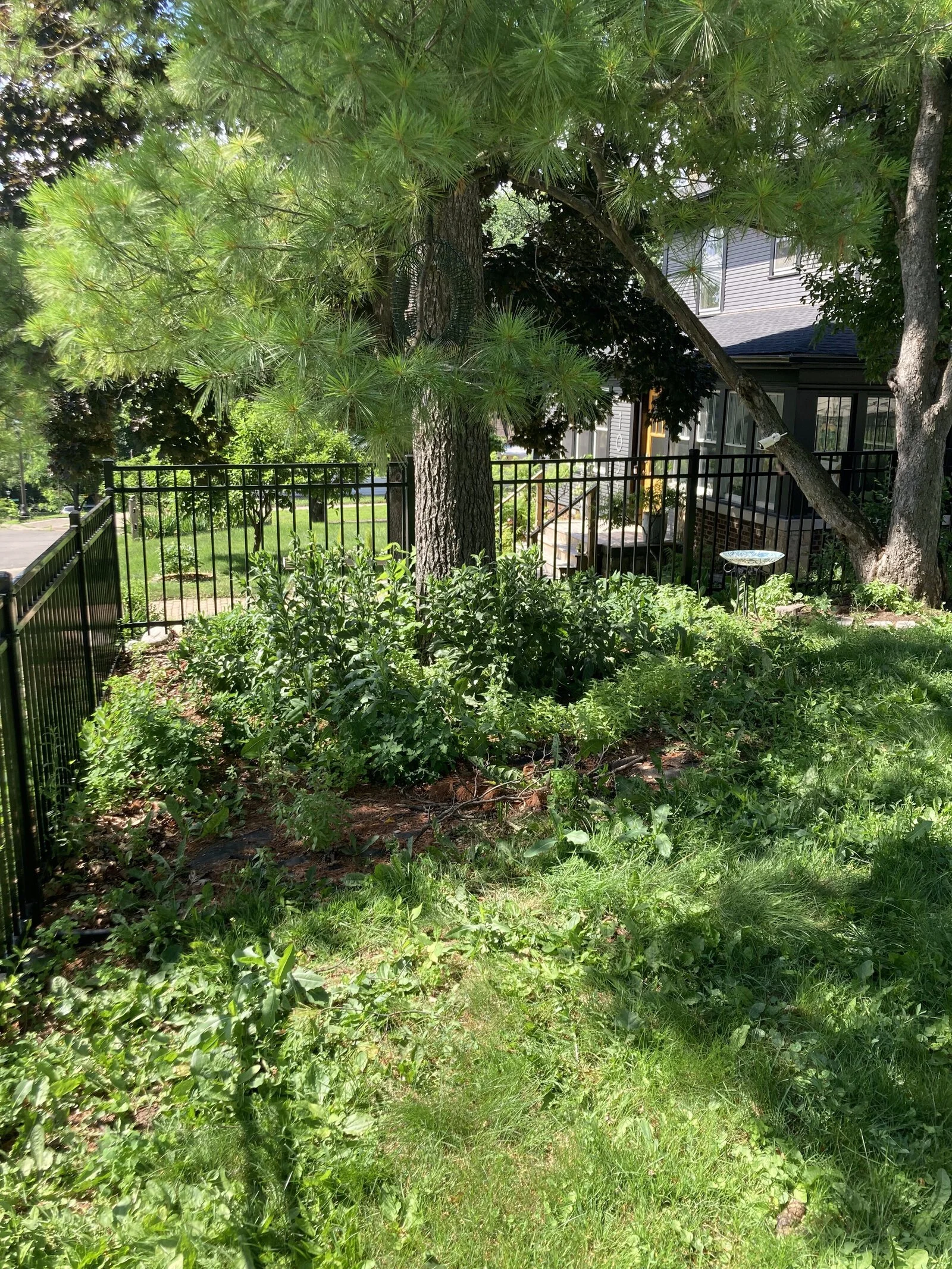
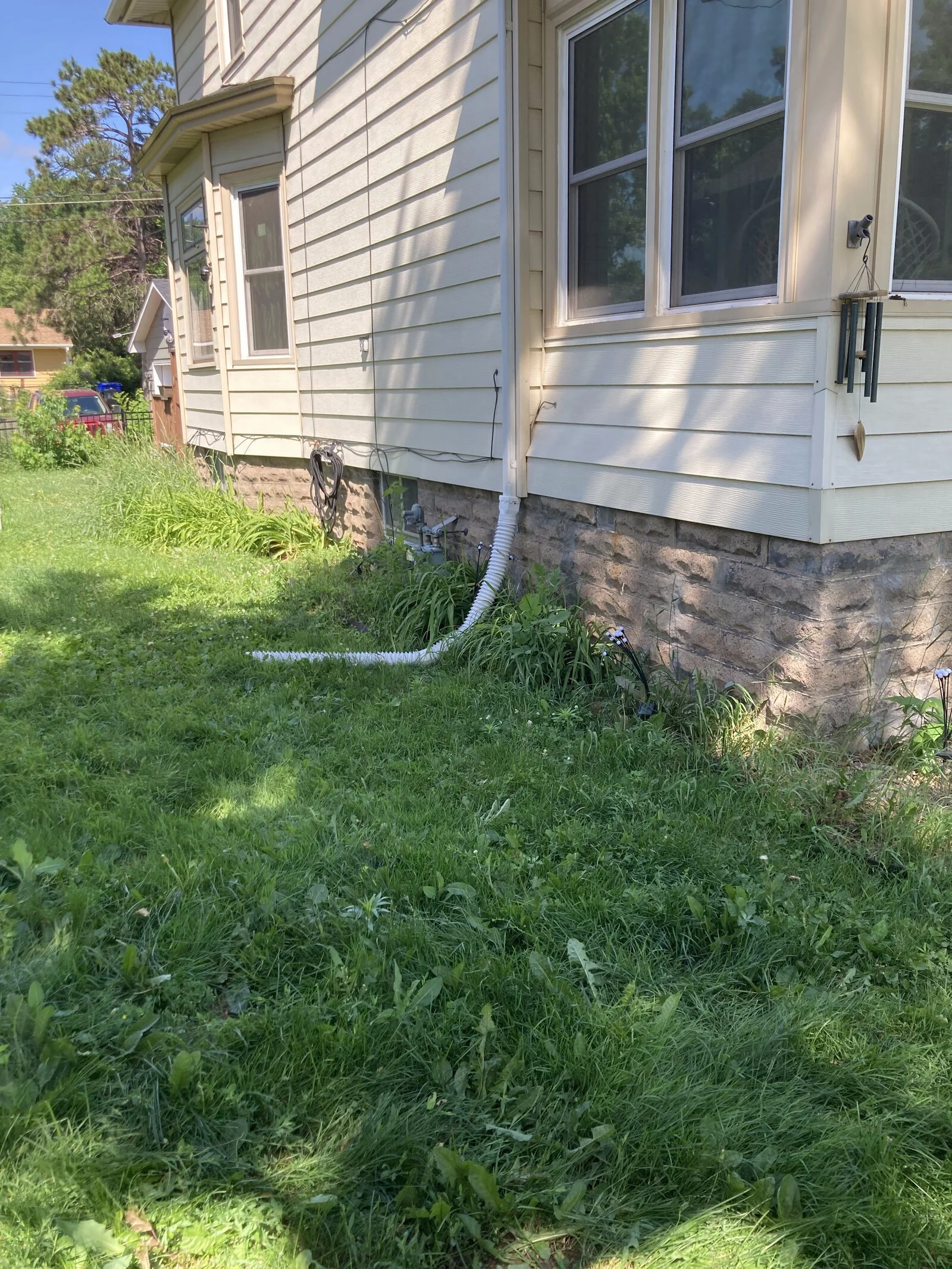
This project came through an L2L grant, so we worked within a tighter budget and focused on seeding with about twenty anchor plugs for structure. The front yard had a shaded corner under a large multi-trunk tree and pine, plus foundation beds full of daylilies and weeds. We solarized the whole area for two months in late summer, then returned in October to seed and plant.
-
![mini prairie]()
Lawns to Legumes 2/3
For the shady corner we used a woods edge seed mix with species that'll tolerate the dappled light under those trees. We kept the existing native plants around the tree bases and worked around them. The sunnier foundation beds got a pollinator mix.
-
![mini prairie]()
Lawns to Legumes 3/3
The anchor plugs—swamp milkweed for the sunny spots, poke milkweed and zigzag goldenrod for the shade, dotted bee balm throughout—give it some structure while the seeds establish. Right now it looks like bare soil with a few small plants. By next summer, those seed mixes will start filling in.
-
![mini prairie]()
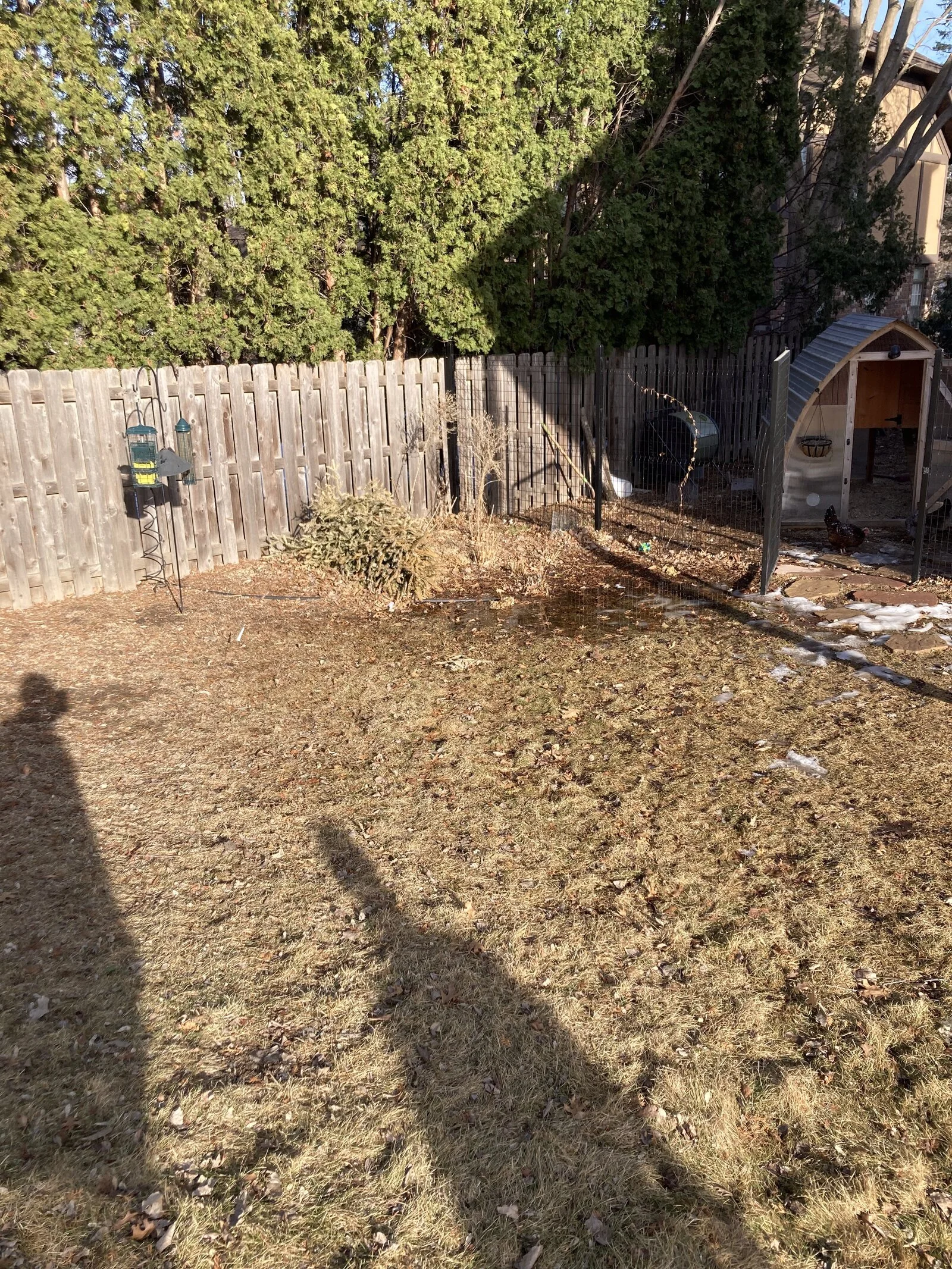
Rain Garden Install 1/3
The northwest corner of this yard sat at the base of a hill, turning to ice each winter and pooling water toward the patio in spring. The homeowner needed a fix that actually worked. We dug a twelve-foot oval basin, excavating deep enough for a true depression, then added sand and gravel for drainage. A French drain now routes the nearest downspout into the garden, sending roof runoff where it can soak in instead of flooding the patio.
-
![mini prairie]()
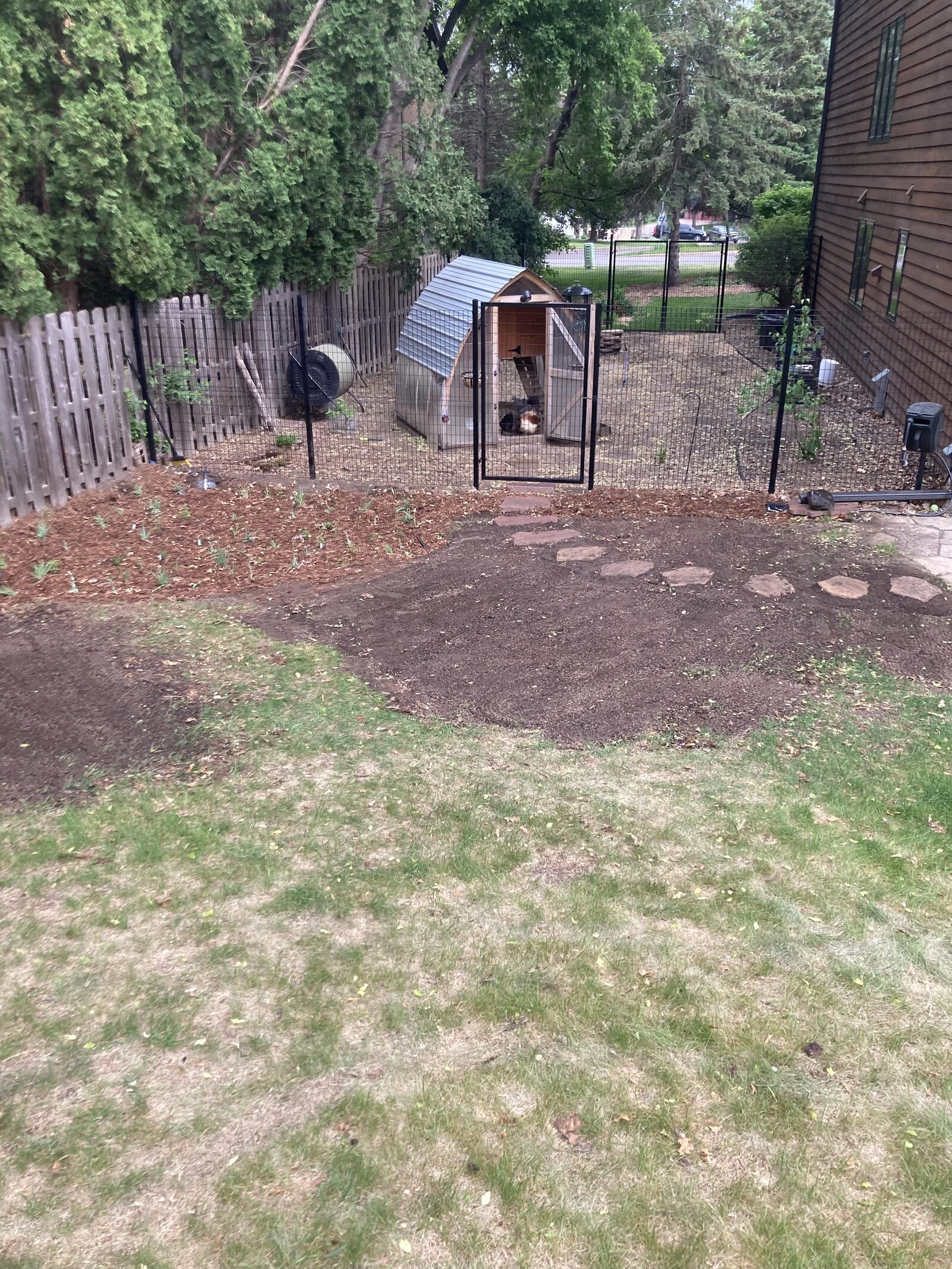
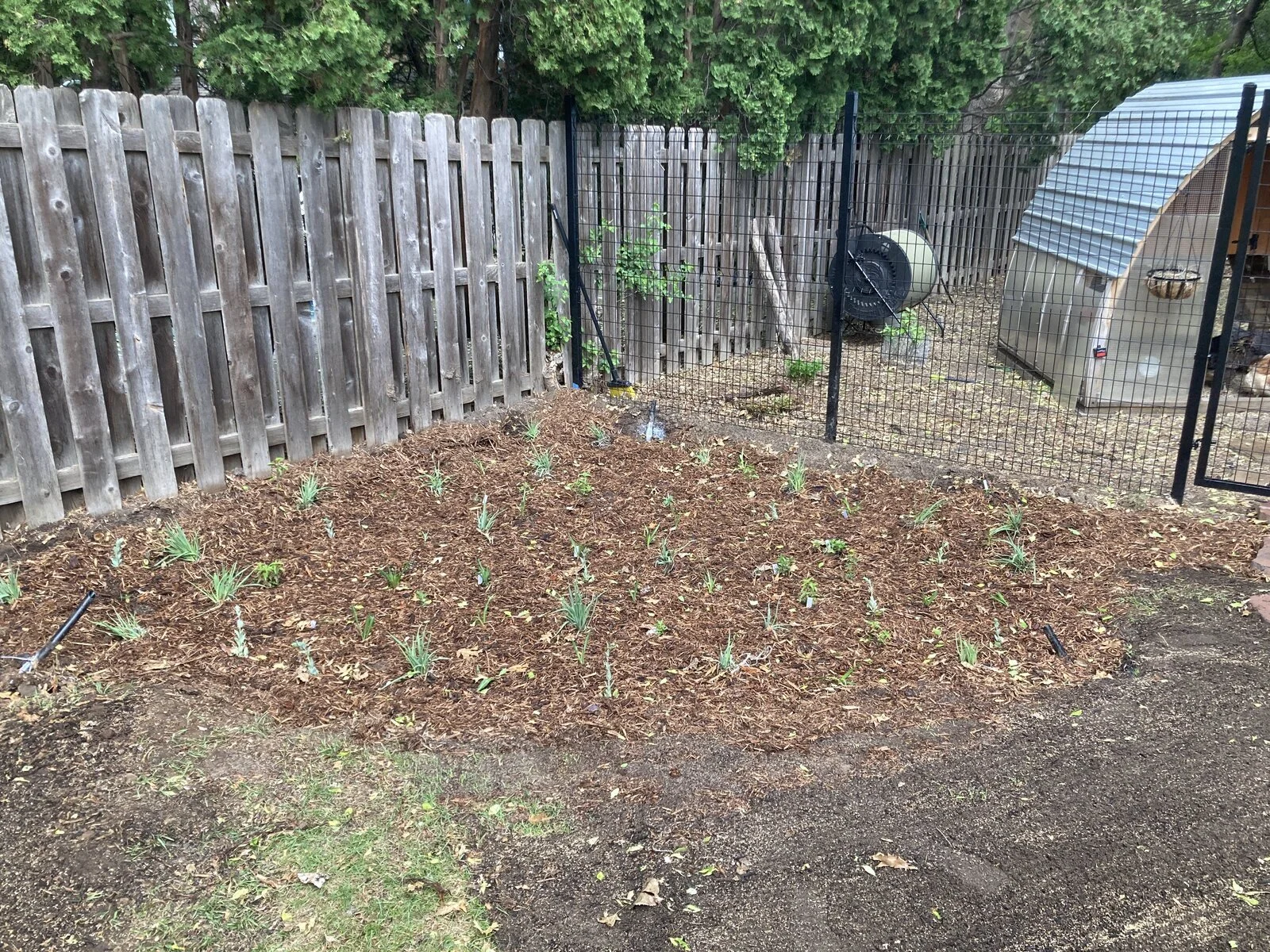
Rain Garden Install 2/3
We regraded the area to direct surface water into the basin, then planted the garden with species that handle wet feet: blue flag iris, culver's root, New England aster, cup plant, blazing star. Red osier dogwood anchors one corner. These plants thrive in the flooding that would kill a typical garden.
-
![mini prairie]()
Rain Garden Install 3/3
Stepping stones through the garden connect to the chicken coop on the other side. By late summer, the plugs were filling in and the garden was doing its job—capturing runoff and letting it soak in slowly instead of sheeting across the yard.
-
![mini prairie]()
Corporate Exterior Update 1/3
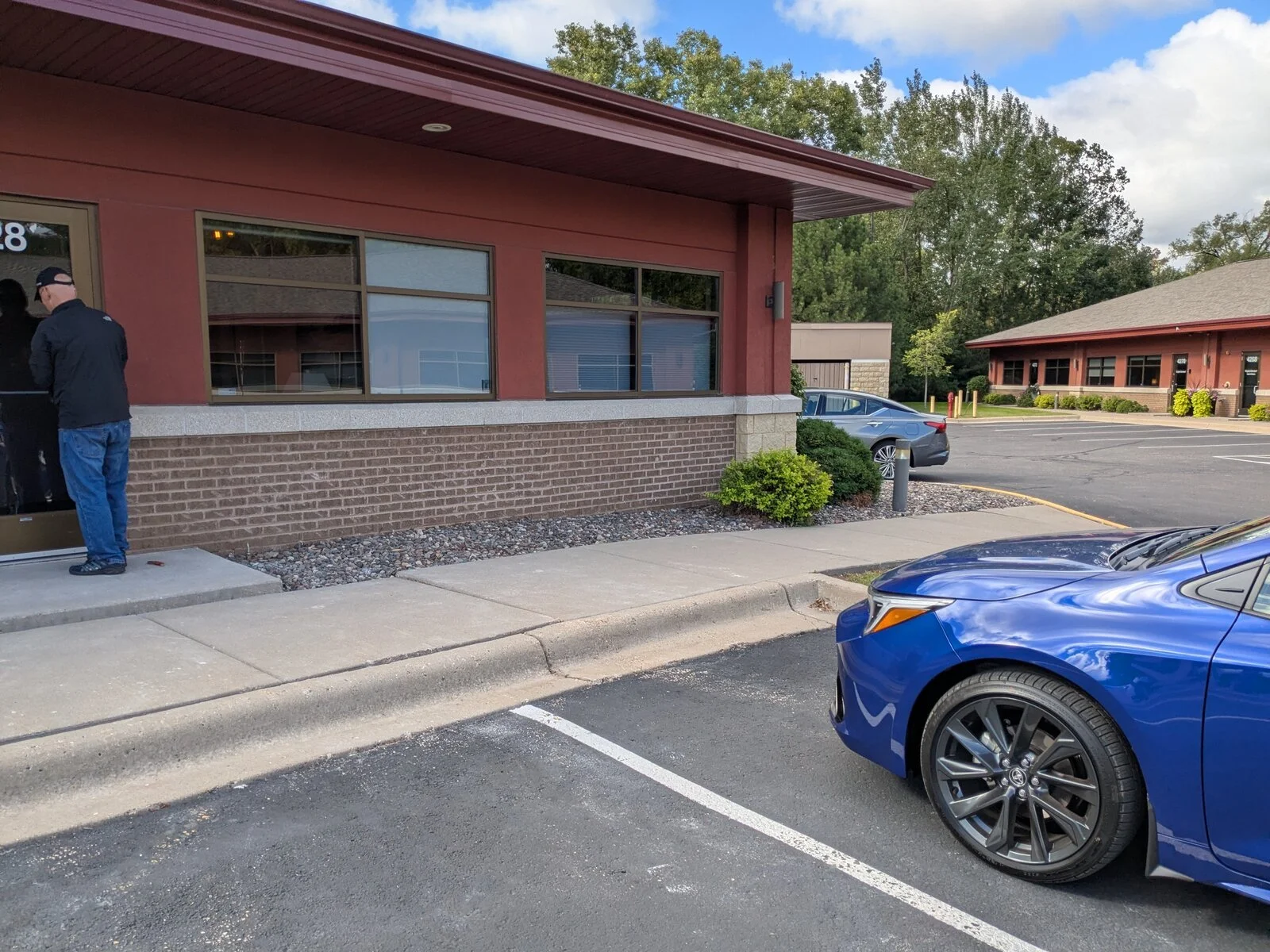
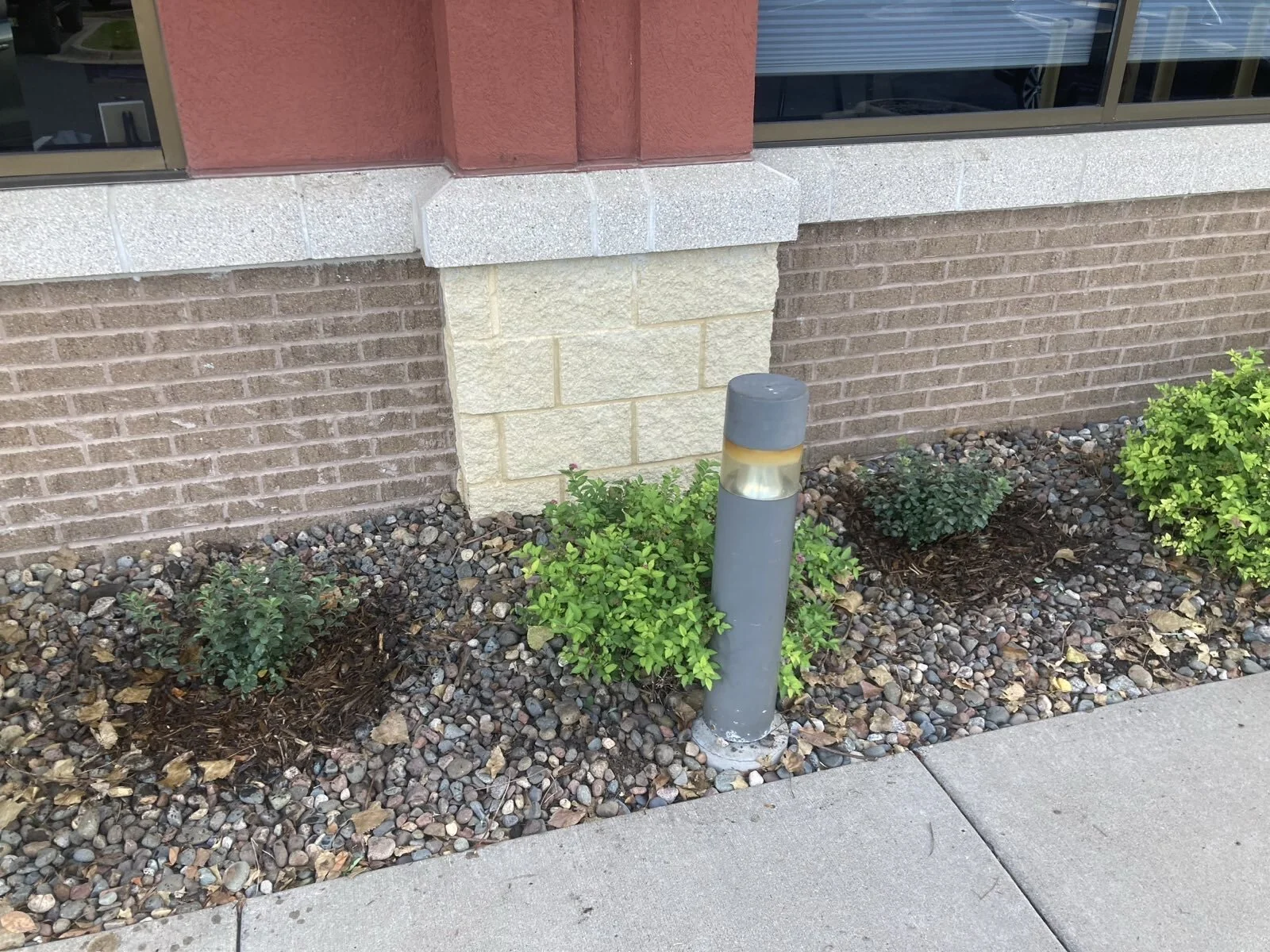
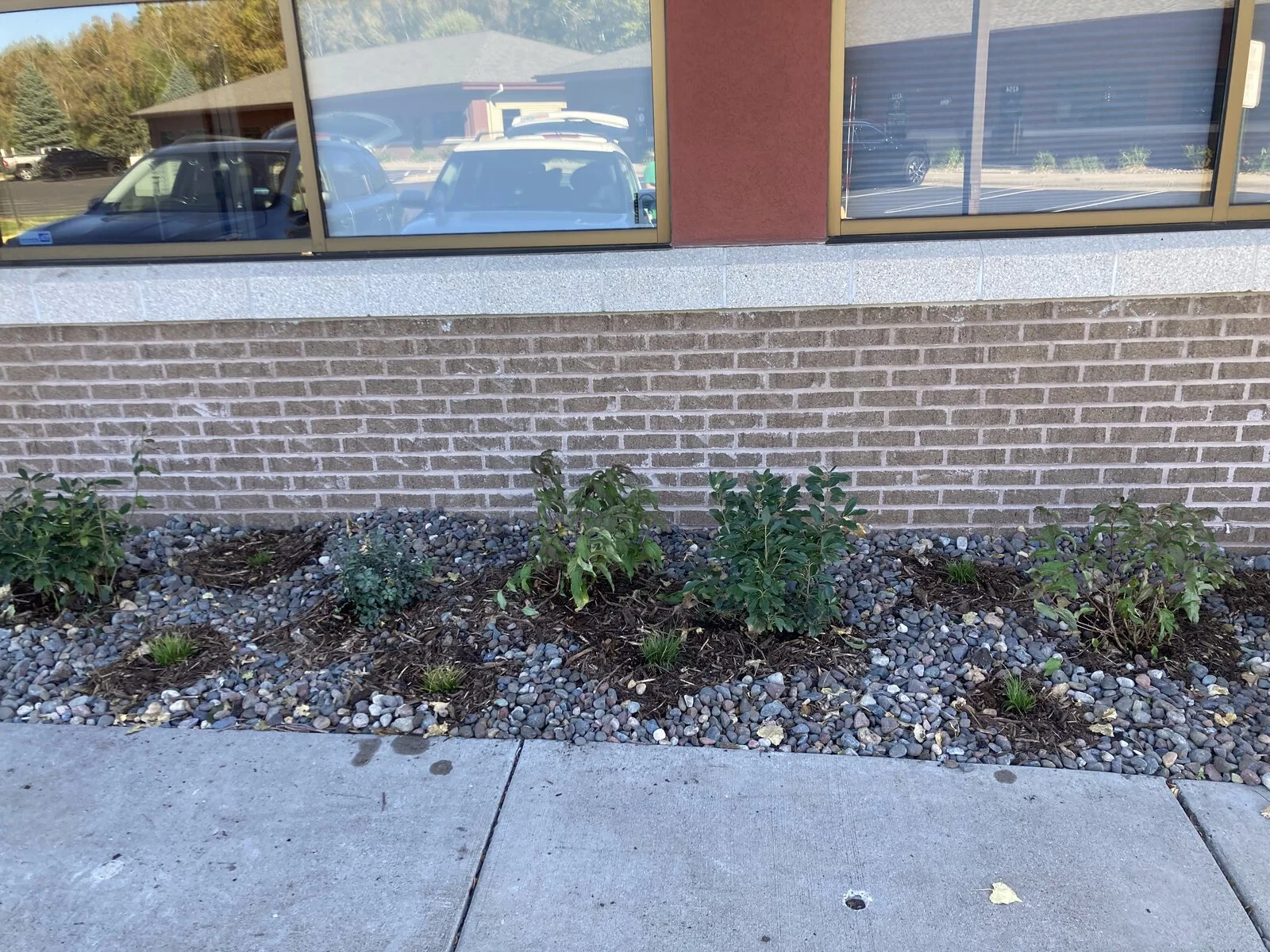
This was our first commercial project — a small office park in Golden Valley with tired foundation plantings and empty gravel beds. One building owner asked for a cleanup, then neighbors joined in. Funded by the HOA, we pocket-planted across six areas on two buildings, working through existing rock mulch and landscape fabric to bring life back without disturbing what worked.
-
![mini prairie]()
Corporate Exterior Update 2/3
One long stretch that had been bare rock for years got a full row of new shrubs with some grasses as accents. We added soil amendment in the planting holes and put hardwood mulch rings around everything to help with establishment.
-
![mini prairie]()
Corporate Exterior Update 3/3
The clients were great throughout — came out to chat during the install, followed watering instructions, genuinely excited about the results. That kind of engagement helps a lot in commercial settings where nobody's officially responsible for the landscaping.